Which Exit Strategy Do VCs Prefer?
Build the company, not the exit
Most venture investors do not back a startup because of the exit it plans. They back it because they believe it can become large, valuable and, eventually, profitable, and they know that a company like that will have options when the time comes. Buyers, public markets and later investors all chase the same thing, which is a business that is clearly winning.
Designing a company around a specific exit tends to work against that. A founder who builds to be acquired by one particular buyer can end up making product and hiring decisions that suit that buyer rather than customers, and if the buyer loses interest, the company is left optimised for a deal that never comes. The exits that create the most value usually look obvious only in hindsight, once the company has already become hard to ignore.
There is also a practical reason investors are relaxed about it. A seed or Series A company is typically seven to ten years from an exit, and over that period almost everything that would decide the outcome will change:
- The IPO window opens and closes with interest rates and market sentiment.
- The list of buyers shifts as incumbents consolidate, challengers grow and companies from adjacent industries move into the space.
- The company itself will probably sell a different product to different customers than it does today.
An exit plan written today is mostly a paper exercise. What investors want instead is confidence that the company is building the kind of value that will attract buyers or public investors, whoever they turn out to be.
The routes that actually exist
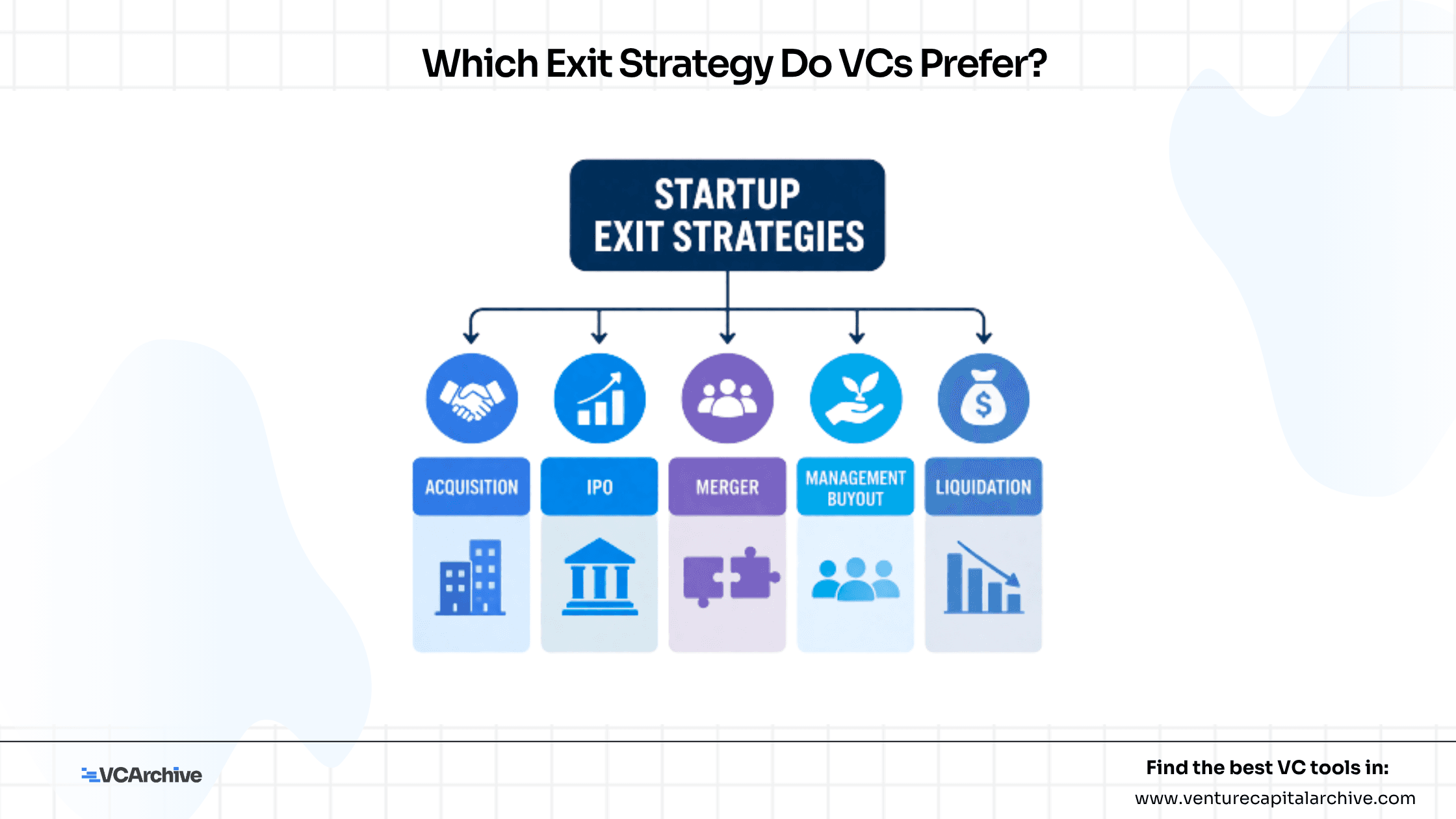
Even if investors do not pick a favourite in advance, it helps to know how venture-backed companies actually reach an exit today. PitchBook counted about 1,636 US VC-backed exits in 2025, up 28.5% on 2024 but still only about a third of the 2021 record. They broke down roughly like this:
- Acquisition by a strategic buyer. By far the most common route, with M&A exit value reaching $140.7 billion in 2025, close to its 2021 high. Google’s $32 billion purchase of Wiz, agreed in 2025 and completed in March 2026, is the largest acquisition in Google’s history.
- Buyout by a private equity fund. Traditionally a small share of venture exits, buyouts now outpace public listings according to PitchBook, as private equity firms buy mature software and services companies that are profitable but not growing fast enough for public markets.
- Public listing. Only 67 companies listed in 2025, including IPOs and reverse mergers, yet listings tend to generate the largest individual outcomes. In the second quarter of 2026, SpaceX’s IPO alone produced more exit value than the previous decade of venture exits combined, according to PitchBook.
- Secondary sale. A later investor buys out earlier shareholders without the company itself being sold, increasingly common while companies stay private for longer.
In practice most companies that exit are acquired, and the IPO, which dominates headlines, is the exception reserved for a very small number of companies that grow very large.
What to say about exits in a pitch
A first pitch meeting is mostly a test of how founders think: how well they understand their market, how they plan, and how they react when an assumption changes. We covered the wider dynamics in What a Mentor Would Tell You Before Your First VC Pitch. Long exit scenarios add little to that test, and many investors would rather spend the time on the competitive landscape, the product roadmap or the go-to-market plan, often asking founders to change one key assumption and talk through how the plan would adapt.
On exits, a short answer usually works best:
- Keep it to a few seconds. In a five-minute pitch, a single sentence on exits is plenty.
- Make it backable. Explain why the company would be an attractive target for several types of buyer, such as established incumbents, fast-growing challengers or larger companies moving in from an adjacent industry.
- Give a couple of examples. Naming two or three realistic buyers, or recent comparable acquisitions in your space, makes the statement credible without turning it into a forecast.
- Have a backup slide ready. Some investors care more about exits than others, and having a slide prepared for that question, as for any common question, shows that the team has thought it through.
What investors are listening for is not a prediction of the exact outcome, but evidence that the founder understands where value is created in their market and who would pay for it.
Liquidity is not the same as an exit
Investors who are relaxed about the final exit often care much more about liquidity along the way. An exit sells the company. Liquidity means some shareholders can sell part of their stake while the company stays independent and keeps growing.
That matters to both sides of the table:
- For investors, the option to sell part of a position early, when a buyer can be found, helps return money to their own LPs years before a final exit.
- For founders and early employees, a secondary sale lets the people building the company take some money off the table, so they are not living on a minimal salary for a decade while all their wealth sits in illiquid shares.
The market for this has grown quickly. PitchBook noted in 2025 that capital dedicated to venture secondaries had more than doubled since 2022 and that tender offers, where a company organizes a buyback or a sale to new investors for its shareholders, were becoming far more common. Secondaries are no longer seen as a last resort but as a regular tool for managing long holding periods.
Most of this can be handled through the investment documents and the company’s structure, so the important thing is alignment. Founders and investors should agree early on how they will approach partial liquidity when it becomes possible, and both should remember that, just like a full exit, it is only an option for companies performing well enough to attract real buying interest.
Know your investor’s clock
Even investors who say they have no preferred exit work to a timetable set by their own fund. A fund raised today usually has around ten years to invest, grow its companies and return money to its LPs, and the closer it gets to the end of that life, the more it will care about liquidity.
Our own data shows how many of those clocks start every month. In New Venture Funds, September 2026 we tracked 87 fund closes with $29.7 billion in disclosed commitments. Thirteen of them, worth $2.5 billion together, had a corporate as LP or sponsor, such as ASML, TSMC and Quanta Computer in Matter Venture Partners’ $450 million Fund II. For a founder, that detail matters for exits too, because a fund backed by the companies in your supply chain is also connected to some of your most likely future acquirers.
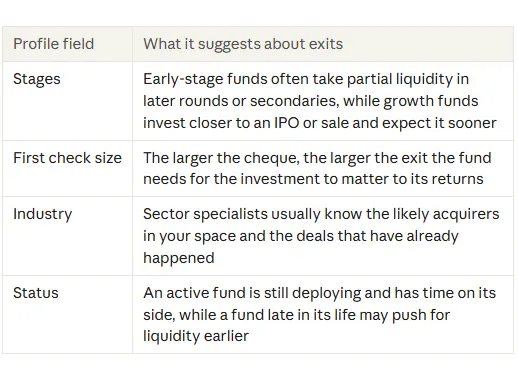
A Venture Capital Archive profile gives useful signals before you sign:
To see how often investors actually realise returns, the Who Cashed Out section of our weekly newsletter tracks the IPOs, acquisitions and other liquidity events behind venture-backed companies each week, including who sold and who was on the cap table.
The exit follows the value
The question of which exit a VC prefers has a less exciting answer than founders expect. Most investors want a company good enough to have several options, a founder who can explain in one sentence why buyers would care, and an honest conversation about liquidity along the way. The exit itself, whether it ends up being an acquisition, a buyout or a listing, is usually the consequence of having built something valuable rather than the plan that got the company there.
More from Dario Villena
View author profile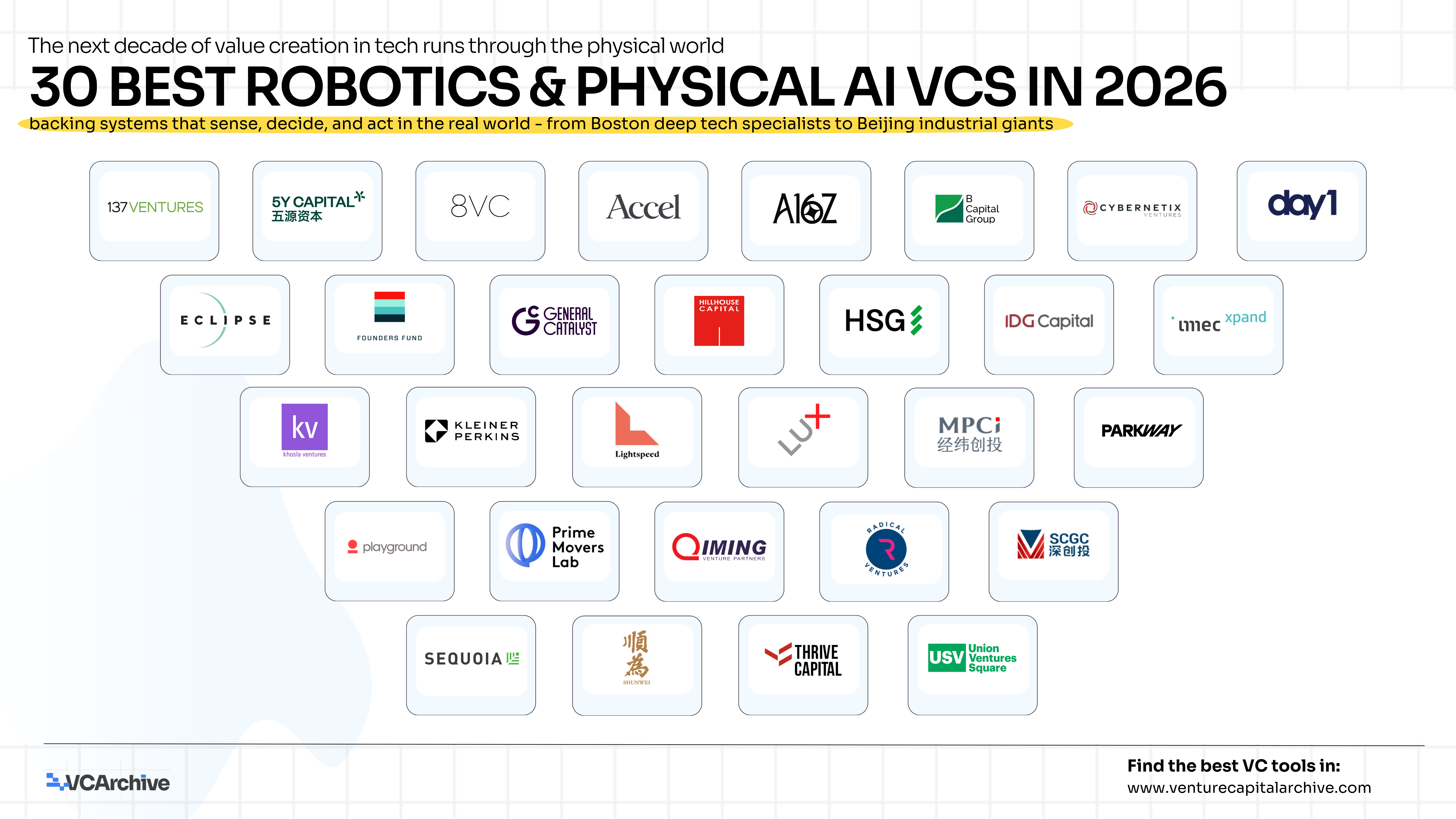
30 Best Active Robotics & Physical AI VCs in 2026
Software built the last decade. Physical AI is building the next one. These are the funds that are backing it.
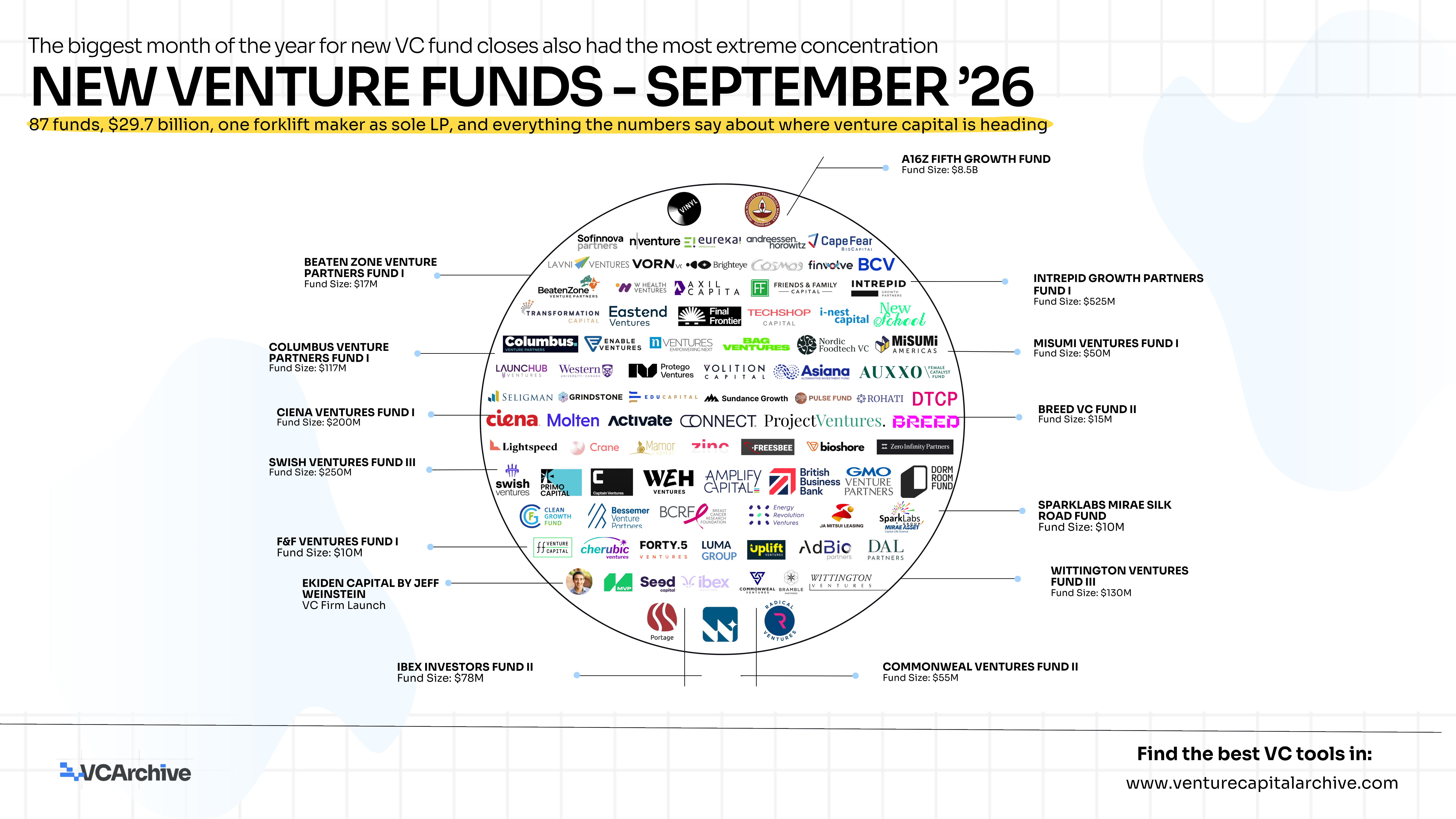
New Venture Funds - September 2026
The biggest fund formation month of 2026 also had the most extreme concentration we have tracked.
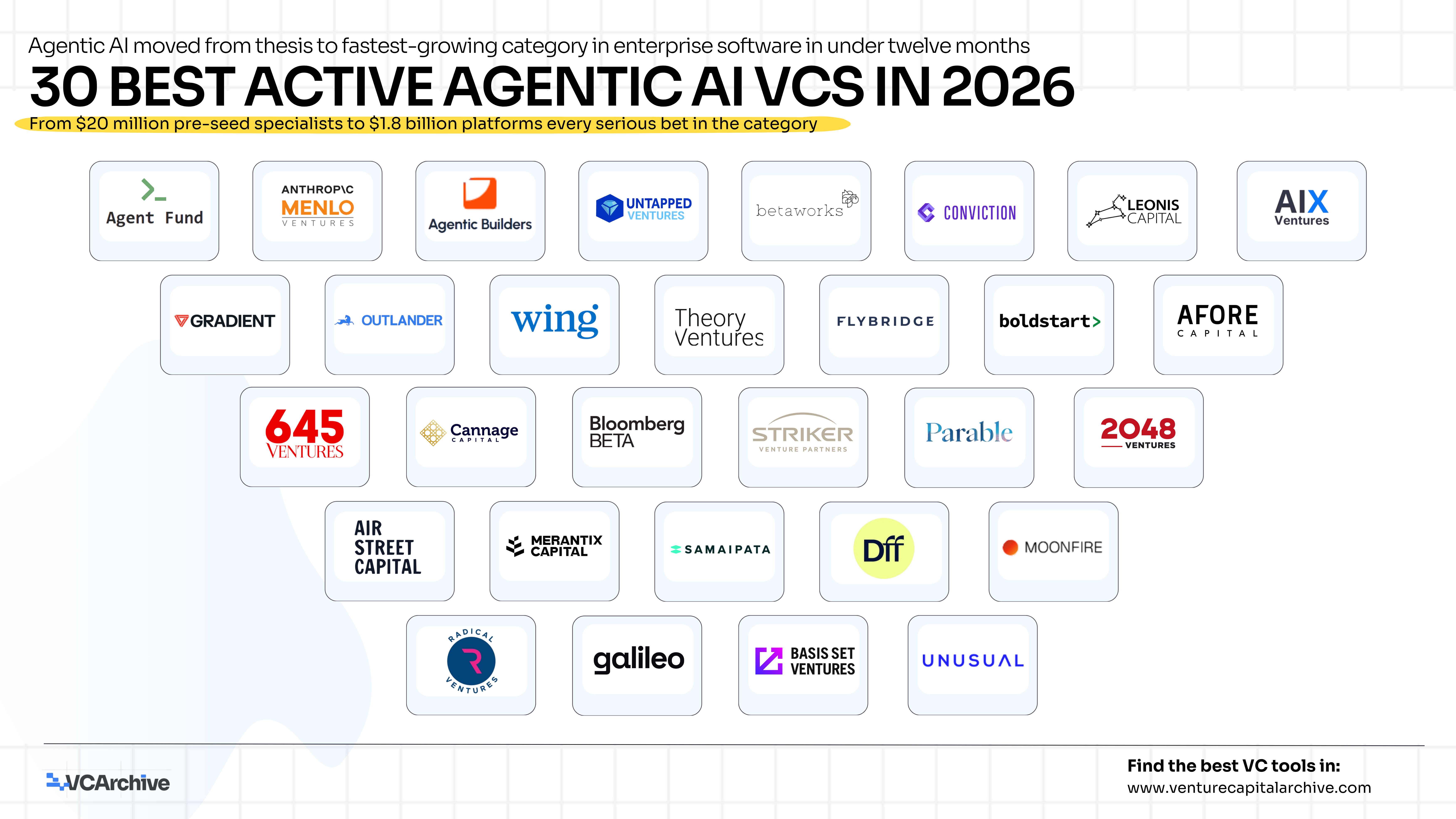
30 Best Active Agentic AI VCs in 2026
The shift from AI that assists to AI that acts autonomously is the biggest investment theme of 2026 and these 30 funds are at the centre of it