
Top 25 VC & Startup Podcasts Worth Your Time
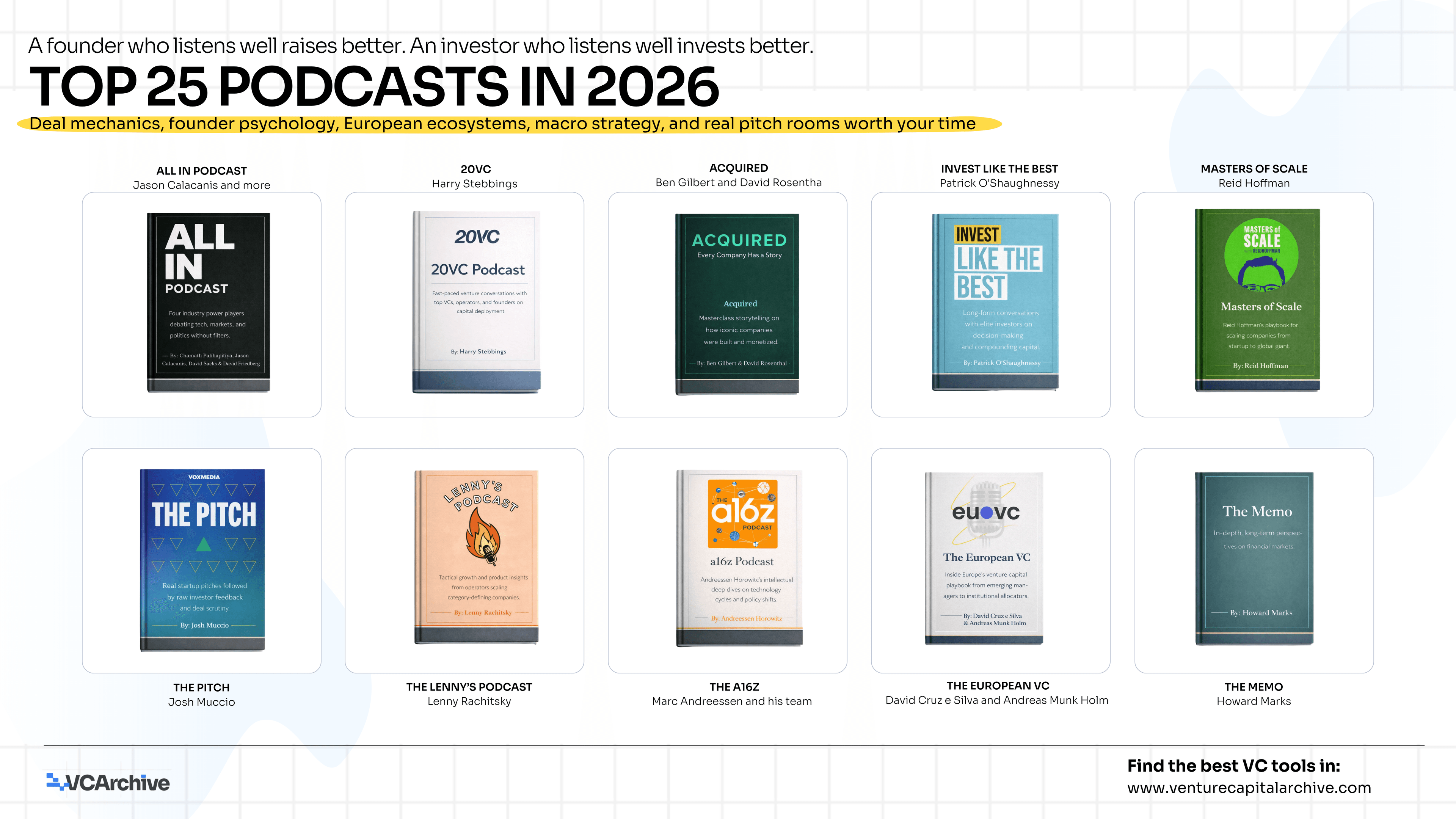
In 2026, the venture capital market is more competitive, more concentrated, and more information-dense than it has ever been. According to the VCA Annual Report 2025, 92% of VCs are already using AI tools for sourcing and diligence. The pace is not slowing down. If anything, the gap between investors who are constantly learning and those who are not is widening faster than ever.
The good news: you do not need to be at your desk to stay sharp. The 25 podcasts on this list cover everything from live founder pitches and fund mechanics to market cycles, European ecosystems, and the geopolitics of tech. Some are 20 minutes. Some are four hours. All of them earned their place.
Here are the 10 we think deserve your ears first. The full 25 are at venturecapitalarchive.com.
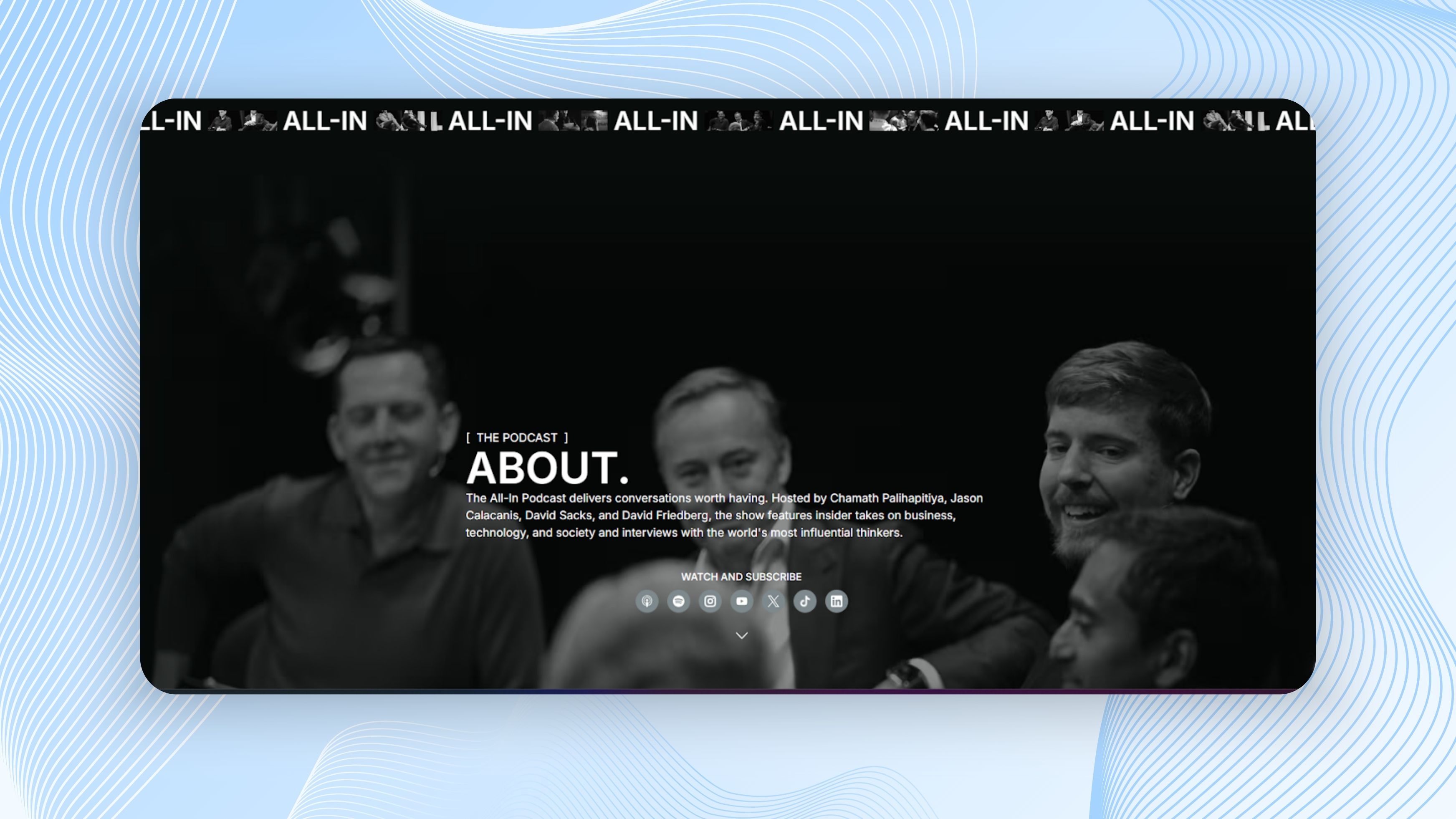
Hosts: Chamath Palihapitiya, Jason Calacanis, David Sacks, David Friedberg
Frequency: Weekly
Episode length: 60-120 min
Four of the most influential voices in tech and venture in the same room every week, arguing about markets, geopolitics, AI, and everything in between. It is unscripted, occasionally chaotic, and consistently ahead of where mainstream coverage ends up. Whether you agree with them or not, you need to know what they are saying.
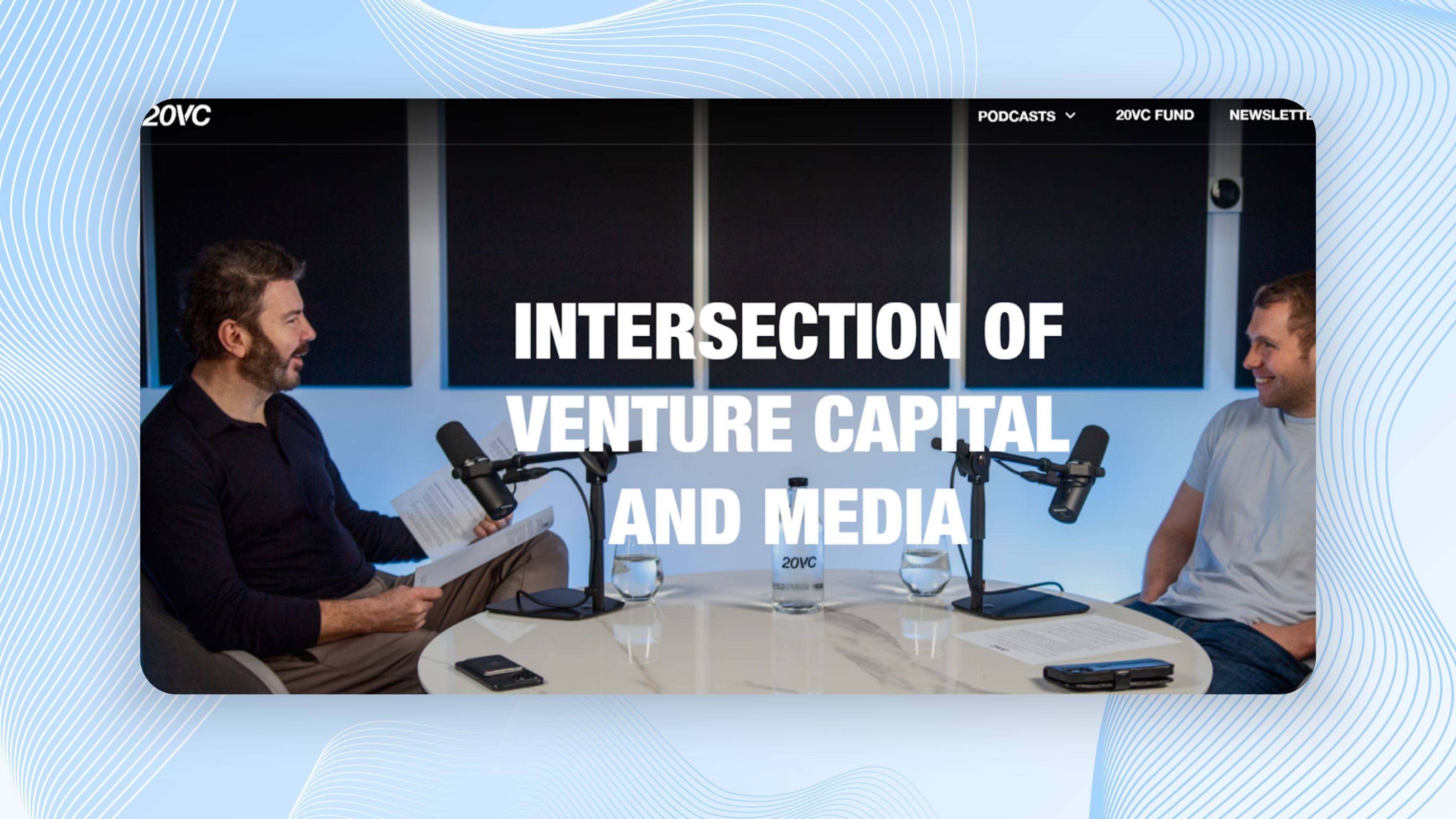
Host: Harry Stebbings
Frequency: 2-3x per week
Episode length: 40-80 min
One of the most listened-to venture podcasts in the world. Stebbings interviews elite GPs, founders, and operators with a directness that gets past the polished talking points. Strong on fund mechanics, scaling strategy, and what top investors actually look for. The name is a lie - episodes are rarely 20 minutes - but the quality is consistent.
3. Acquired

Hosts: Ben Gilbert and David Rosenthal
Frequency: Monthly
Episode length: 1.5-4 hours
The most ambitious podcast on this list. Gilbert and Rosenthal produce multi-hour cinematic deep dives into iconic companies - NVIDIA, Berkshire Hathaway, Spotify, LVMH - analyzing strategy, competitive dynamics, and long-term value creation with a level of research that rivals published books. Monthly frequency, but each episode is worth an entire weekend.
Host: Patrick O'Shaughnessy
Frequency: Weekly
Episode length: 1-2 hours
Masterclass-level conversations with elite investors, operators, and thinkers. O'Shaughnessy is one of the best interviewers in the space - he actually listens, follows up, and surfaces frameworks rather than just quotes. Essential for anyone serious about investment philosophy and mental models.
Host: Reid Hoffman
Frequency: Weekly
Episode length: 25-60 min
Reid Hoffman built LinkedIn and has backed more consequential companies than almost anyone alive. Masters of Scale uses structured storytelling to explore how companies grow from zero to global scale. Produced with care, accessible to a wide audience, and consistently insightful even for experienced investors.
6. The Pitch
Host: Josh Muccio
Frequency: Weekly
Episode length: 40-50 min
The only podcast on this list where you hear real founders pitch real VCs in real time, including the deliberation afterward. If you want to understand what separates a fundable pitch from a forgettable one, this is the most direct education available. Founders should listen to it before every raise. Investors should listen to it to stay calibrated.
Host: Lenny Rachitsky
Frequency: Weekly
Episode length: 1.5-2 hours
Tactical, operator-focused, and built around the questions that founders and product leaders actually face when scaling. Rachitsky interviews elite practitioners - not just investors - which gives the podcast a ground-level credibility that most venture media lacks. Essential for anyone investing in consumer or product-led growth companies.
8. a16z Podcast
Host: Marc Andreessen and the a16z team
Frequency: Weekly
Episode length: 50-70 min
Andreessen Horowitz has been shaping how the industry thinks about AI, crypto, and emerging technology for over a decade. The podcast is their public-facing thesis engine - long, substantive, and often a preview of where institutional capital is about to flow. Treat it as primary research on where one of the most influential firms in venture is placing its bets.
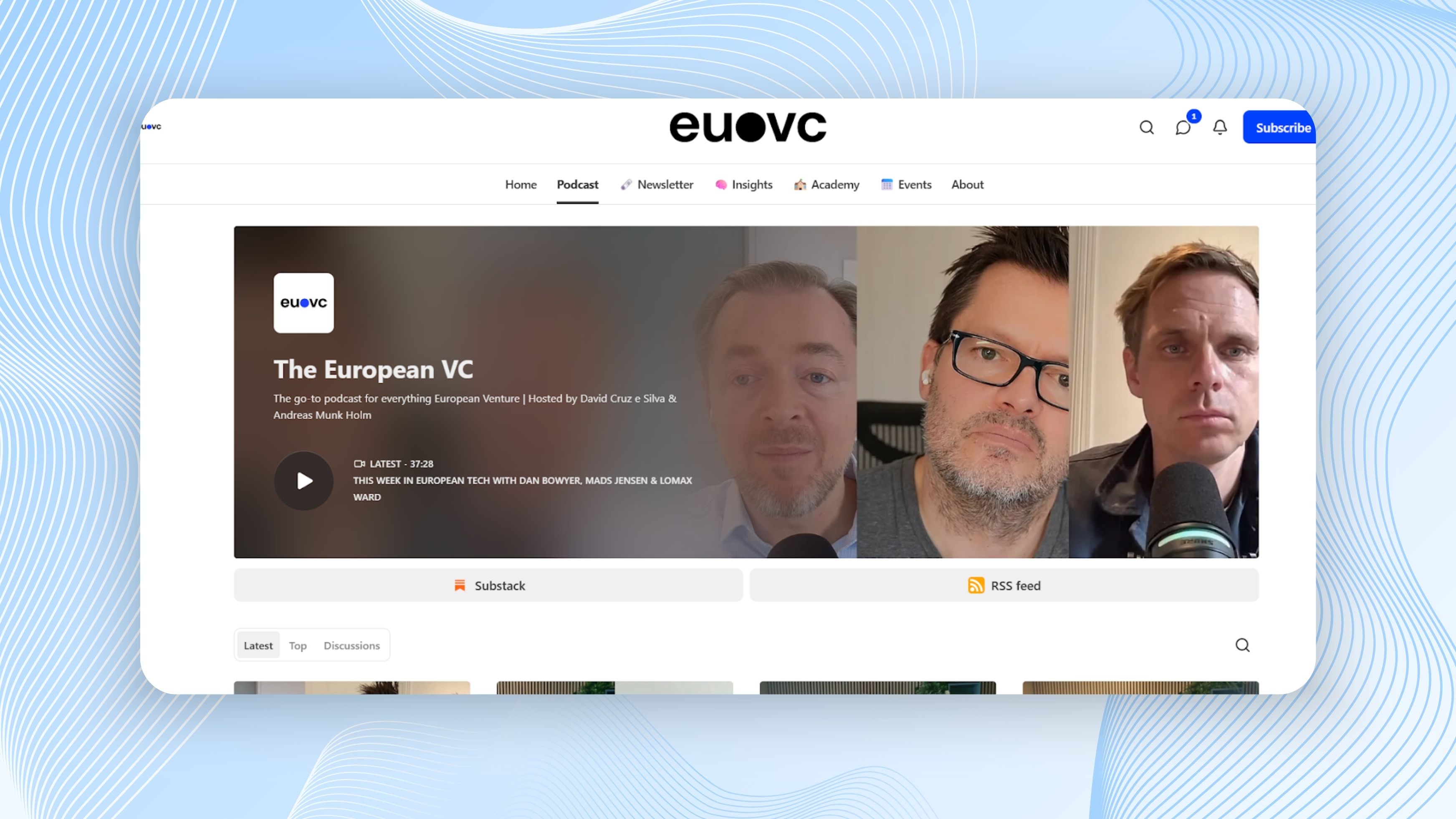
Hosts: David Cruz e Silva and Andreas Munk Holm
Frequency: 2x per week
Episode length: 35-55 min
The most focused platform on Europe's venture ecosystem. Covers fund formation, LP-GP dynamics, emerging managers, and how the European market structurally differs from the U.S. model. The VCA Annual Report 2025 documents that European VC has been outperforming North America on net IRR over 10 and 15-year horizons. If you are not paying attention to what is happening across the Atlantic, this is where to start.
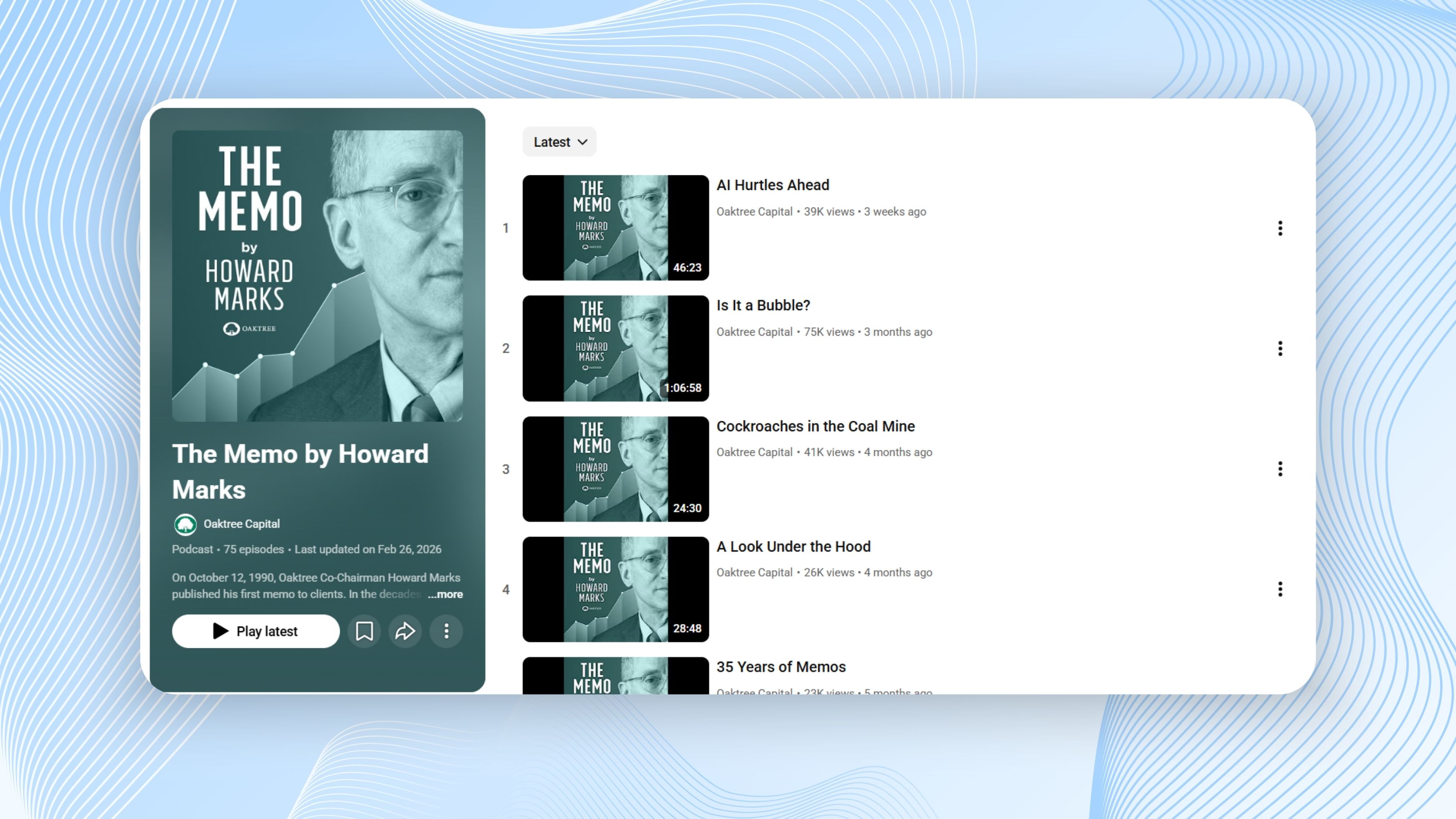
Host: Howard Marks
Frequency: Monthly
Episode length: 20-60 min
Howard Marks has been writing his investment memos for decades. The podcast distills his long-term views on market cycles, investor behavior, credit markets, and risk discipline. In a venture landscape obsessed with upside, Marks is one of the few voices consistently worth hearing on downside, cycle awareness, and second-level thinking. Particularly valuable for investors navigating the post-2021 valuation reset.
Your next 10 hours of listening are already planned.
The full list covers the complete spectrum - founder fundraising narratives, space tech, European ecosystems, engineering culture, SaaS metrics, private credit, and more. High-frequency weekly shows sit alongside monthly deep dives. Niche audiences sit alongside podcasts with millions of downloads.
The question is not how much time you have. It is which three or four you make non-negotiable.
Find all 25 - with full profiles, episode lengths, frequencies, and what each one is actually for - at venturecapitalarchive.com.
Research and curation by the Venture Capital Archive team. Data sourced from the VCA Annual Report 2025 and direct publisher data.
Top 25 Podcasts 2025
Top 25 Podcasts 2025 highlights the most influential and widely followed podcasts shaping conversations this year. The list features shows across technology, business, culture, storytelling, and personal growth that captured global audiences in 2025. These podcasts stand out for their engaging hosts, insightful discussions, and strong listener communities. From deep-dive interviews with industry leaders to compelling narrative series, each podcast reflects the evolving media landscape. Together, they showcase how audio content continues to inform, entertain, and inspire millions of listeners worldwide.
Harry Stebbings interviews the most influential GPs and founders in venture — from Sequoia to Benchmark to Founders Fund — pulling out real investment philosophy, not PR talking points. Episodes run 45 to 90 minutes and dig into reserve allocation, LP dynamics, fund sizing, and how elite managers navigate market corrections. The archive tracks the shift to agentic AI, changing valuation multiples, and corporate governance friction in real time. Stebbings also runs an $800M+ fund family powered by the same media platform, making the show itself a live case study in distribution-as-dealflow.
Produced by Andreessen Horowitz and anchored by co-founders Marc Andreessen and Ben Horowitz alongside a world-class rotation of general partners, this is the clearest public window into how one of the world's largest VC firms constructs its technology theses. Episodes systematically map next-decade innovation across foundational AI models, decentralized infrastructure, bio-IT convergence, and defense-tech capabilities. Andreessen and Horowitz apply the software eats the world framework and the wartime versus peacetime management paradigm to live market conditions, making the analysis feel grounded rather than theoretical.
Ben Gilbert and David Rosenthal produce one-and-a-half to four hour historical reconstructions of the world's most consequential companies — covering their origins, competitive battles, pivotal acquisitions, and strategic decisions in exhaustive, primary-source detail. Episodes treat business history as a serious subject, examining corporate strategy, founder psychology, market structure evolution, capital allocation choices, and organizational dynamics with the care of academic research. Monthly cadence means each episode is built to last rather than fill a weekly slot.
Chamath Palihapitiya, Jason Calacanis, David Sacks, and David Friedberg debate markets, geopolitics, AI, venture capital, and regulatory developments in 60 to 120 minute weekly panels. The format is deliberately adversarial — the same news event gets four different interpretations from four different vantage points, covering monetary policy, tech legislation, startup ecosystem health, and scientific breakthroughs. The chemistry between the four hosts keeps the analysis from settling into comfortable consensus, which is rarer than it sounds in investor media.
TechCrunch's financial podcast delivers 30 to 45 minute numbers-driven breakdowns of private market activity multiple times per week. It tracks real deal structures — forward revenue multiples, liquidation preferences, down-round mechanics — and examines how macro variables like interest rates and liquidity constraints affect startup runways across stages. GPU infrastructure spend, usage-based pricing transitions, and secondary market liquidity trends are recurring topics. The editorial standard prioritizes data clarity over narrative, which makes it one of the more reliable weekly reads on what capital is actually doing.
Jason Yeh documents real fundraising journeys through 25 to 45 minute narrative episodes with founders who have successfully raised millions. Episodes cover investor outreach strategy, pitch development, valuation negotiations, relationship building timelines, and the emotional demands of raising capital while simultaneously running a company. Both successful rounds and difficult fundraising situations are covered with equal honesty — the failures and near-misses are often more instructive than the clean wins.
Patrick O'Shaughnessy hosts one to two hour masterclass conversations with legendary investors, founders, CEOs, and academics about the principles that drive exceptional capital allocation across both public and private markets. Rather than market commentary or deal news, episodes excavate timeless decision-making frameworks, behavioral biases, competitive moat construction, business quality assessment, and how emerging technology reshapes investment opportunity over long time horizons. The conversations are structured to extract how people think, not just what they have done — which makes the archive unusually durable.
Produced by Sixth Street, a $75B+ AUM alternative asset manager, this podcast unpacks private credit, infrastructure financing, asset-backed lending, sports investments, media rights, and growth capital with the operational specificity that only a firm of that scale can credibly deliver. Episodes explore how sophisticated institutional investors structure complex transactions, manage downside protection across different asset classes, and deploy long-duration capital in areas that receive far less public attention than venture or public equities.
Former Airbnb product leader Lenny Rachitsky hosts one-and-a-half to two hour tactical conversations with experienced operators about the real mechanics of building and scaling products that people actually want to use. Episodes cover product discovery, growth loops, user acquisition, retention strategy, pricing decisions, organizational design, and the leadership choices that shape company culture over time. The focus is entirely on execution — what happens after capital is raised — rather than the fundraising narrative that dominates most startup media.
Reid Hoffman uses structured narrative storytelling — 25 to 60 minute episodes with clear arc and curated guest conversations — to document the operational and leadership decisions that determine long-term company success after product-market fit is achieved. Topics include organizational design, hiring philosophy, culture under rapid growth, innovation strategy, and founder resilience. Guests are founders and executives who have actually scaled some of the world's most recognized companies, which keeps the content grounded in lived experience rather than aspirational advice.
Sam Parr and Shaan Puri brainstorm business ideas, analyze overlooked markets, and examine unconventional paths to building valuable companies in energetic 50 to 60 minute episodes. The show combines market trend analysis, acquisition opportunity spotting, and direct founder story dissection — deliberately avoiding the VC fundraising lens in favor of cash flow, ownership, and operator-first thinking. The format is loose enough to follow tangents that end up being more interesting than the original premise.
Hosted by Ben Popper alongside a rotating panel of veteran developers and engineering leaders, this show documents how real software teams build, scale, and manage modern codebases under actual production pressure. It covers the transition from monolithic to distributed architectures, the cultural shift brought on by AI-assisted coding tools, developer burnout mitigation, and what high-performance engineering teams actually look like day to day. Episodes are grounded in practitioner experience, not theoretical frameworks, which makes the insights more transferable than most tech podcasts.
Co-hosted by TechCrunch Editor-in-Chief Connie Loizos and veteran VC Alex Gove, this show draws on a premium daily readership of 60,000+ subscribers and Loizos's deep Silicon Valley access built over decades. Episodes run 25 to 45 minutes of tight, boardroom-level insight from leading GPs, growth-stage operators, and sovereign allocators. Topics range from consumer app rebounds and fintech architectures to Physical AI, robotics, and how computing cost dynamics are reshaping business model sustainability across early and late-stage companies.
One of the most comprehensive audio archives dedicated to the European technology ecosystem, hosted by the Tech.eu editorial team. Episodes explore VC capital flows, regulatory dynamics, sovereign technology ambitions, deep-tech commercialization, and the specific scaling challenges that European founders face when expanding across fragmented markets. The show examines how diverse regulatory structures and emerging regional hubs influence startup formation, fundraising conditions, and cross-border expansion strategies — consistently treating Europe as a distinct ecosystem rather than a footnote to US market coverage.
The Financial Times' flagship technology podcast takes a season-by-season investigative approach, with each run focused on a single major theme — AI, semiconductor supply chains, cybersecurity, digital regulation, or the future of work. It combines rigorous FT journalism, expert interviews, policy analysis, and real-world case studies to surface what is actually driving technological change beneath the headline news cycle. Episodes examine how governments, corporations, investors, and consumers interact with the same technological shifts from very different vantage points.
One of the most focused and consistently produced platforms dedicated exclusively to Europe's venture ecosystem, hosted by experienced investors with direct access to European GPs, LPs, and ecosystem builders. Episodes cover fund formation mechanics, capital raising processes, portfolio construction strategy, LP-GP relationship dynamics, and the structural differences between European and US venture markets. The twice-weekly cadence means the archive builds quickly across geographies, fund stages, and market conditions in a way that slower shows cannot match.
Nick Moran, GP at New Stack Ventures, has built one of the most technically rigorous free resources on early-stage deal mechanics through 1,000+ episodes split between long-form GP/LP conversations and focused Investor Stories capsules. The show documents the real math of seed-to-Series A graduation rates, anti-portfolio misses, and governance structure during down markets. Episodes go deep on liquidation preferences, weighted-average anti-dilution ratchets, priced-round term sheets, and investor side letters — the kind of operational detail that most podcasts gloss over entirely.
Mario Gabriele extends the rigorous analytical framework of The Generalist newsletter into one to one-and-a-half hour narrative deep dives and case studies focused on ambitious founders, disruptive companies, and structural technological shifts. Episodes explore startup ecosystems, AI strategy, fintech, enterprise software, network effects, platform business models, and market creation — always with an emphasis on identifying the forces driving change before they become obvious. Gabriele's research-first process means episodes feel more like longform journalism than casual founder conversation.
A cross-border intelligence platform that brings together founders at $1M+ ARR, elite check-writers, and regulatory experts in 25 to 50 minute interviews. Episodes track how private capital corridors react to macroeconomic shifts, drawing on real-time data from Carta and the NVCA to ground the conversations in actual market movement. It examines AI security vulnerabilities, edge computing deployment, enterprise automation, and the unit economics of capital-intensive sectors including climate tech and vertical B2B software — always with an eye on what the numbers actually support.
Howard Marks extends his legendary written memos — among the most read and respected documents in global institutional finance — into a podcast format exploring market cycles, risk psychology, probabilistic decision-making, and long-term investment discipline. Episodes emphasize second-level thinking, risk asymmetry, and cycle awareness over prediction and trend chasing. The core argument across the archive is consistent: the quality of your thinking about uncertainty matters more than the accuracy of your forecasts.
Winner of the AIC Best Broadcast Journalist Award in both 2024 and 2025, Jonathan Davis analyzes venture and private market investments through a broad macroeconomic lens that most VC podcasts completely ignore. Episodes unpack how interest rate fluctuations, geopolitical tensions, and institutional asset re-allocations directly affect late-stage private market pricing and NAV spreads. Davis examines listed venture trusts, closed-end fund structures, and how sovereign allocators manage long-duration capital — connecting dots between global financial systems and the startup ecosystem in a way that is rare and genuinely useful.
Josh Muccio puts real founders in the room with real investors and records exactly what happens. Episodes run 40 to 50 minutes capturing pitch presentations, investor questions, negotiation dynamics, and deliberation — including the deals that do not get made and the reasons why. The archive spans seed to growth-stage pitches across a wide range of sectors and founder backgrounds, making it one of the most representative and unfiltered samples of live fundraising dynamics available in any public media format.
Chad Anderson, Managing Partner at Space Capital, strips away the sci-fi narrative to focus exclusively on the commercialization of the orbital economy. Episodes use Space Capital's proprietary Space IQ reports to track real market trends across satellite communications, geospatial intelligence, and heavy-lift launch economics. The framework treats space infrastructure not as an isolated sector but as a critical layer that is actively transforming global logistics, defense capabilities, climate tracking, and enterprise software. Each episode is built around data, not speculation.
One of the longest-running VC podcasts with over 2,200 episodes, TWiSt delivers a real-time chronicle of Silicon Valley through live pitch teardowns, deck audits, and fiery investor roundtables. Jason Calacanis applies a combat-tested operator-first lens to track angel underwriting tactics, defense-tech innovation, GPU economics, and the survival metrics B2B software businesses actually need to navigate market corrections. The show's frequency means it catches shifts in sentiment, capital flow, and sector momentum faster than almost anything else in the space.
Hosted by Lucas Pols, GP at 1752vc and former President of Tech Coast Angels, this show exposes the unvarnished realities of venture careers that most podcasts in the space carefully avoid. Sessions run one to two hours covering angel syndicate structuring, cap table audits, customer concentration risk assessment, and the behavioral mechanics of investor consensus. It also includes detailed technical deep dives on multi-agent AI system architectures and early-stage deal room construction — balancing the human side of VC with hard operational content.
More from Dario Villena
View author profile
Top 25 VC & Startup Influencers You Should Be Following
The thought leaders worth turning notifications on for
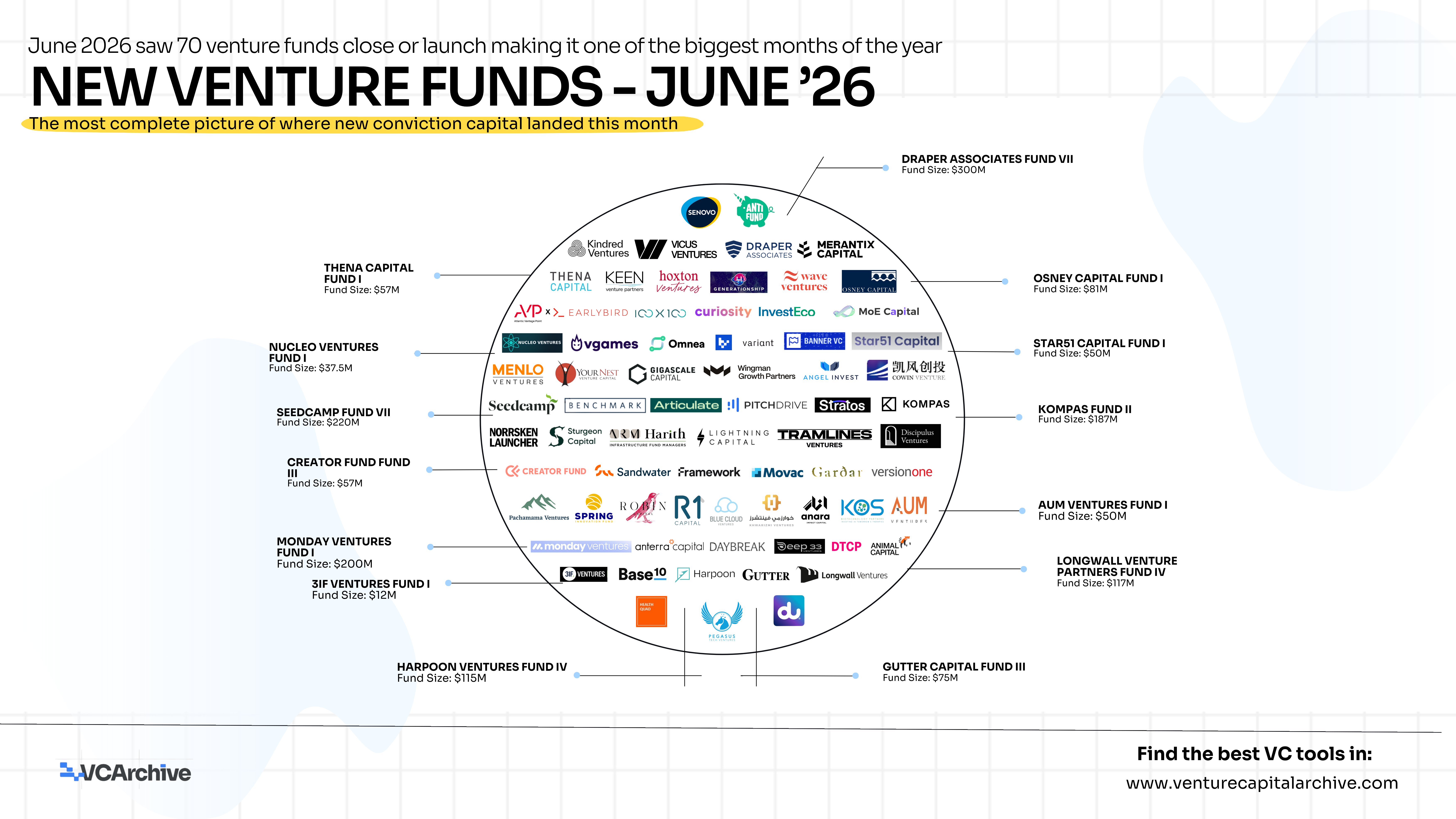
New Venture Funds - June 2026
70 funds walked into June 2026 each one convinced it knows something the others don't
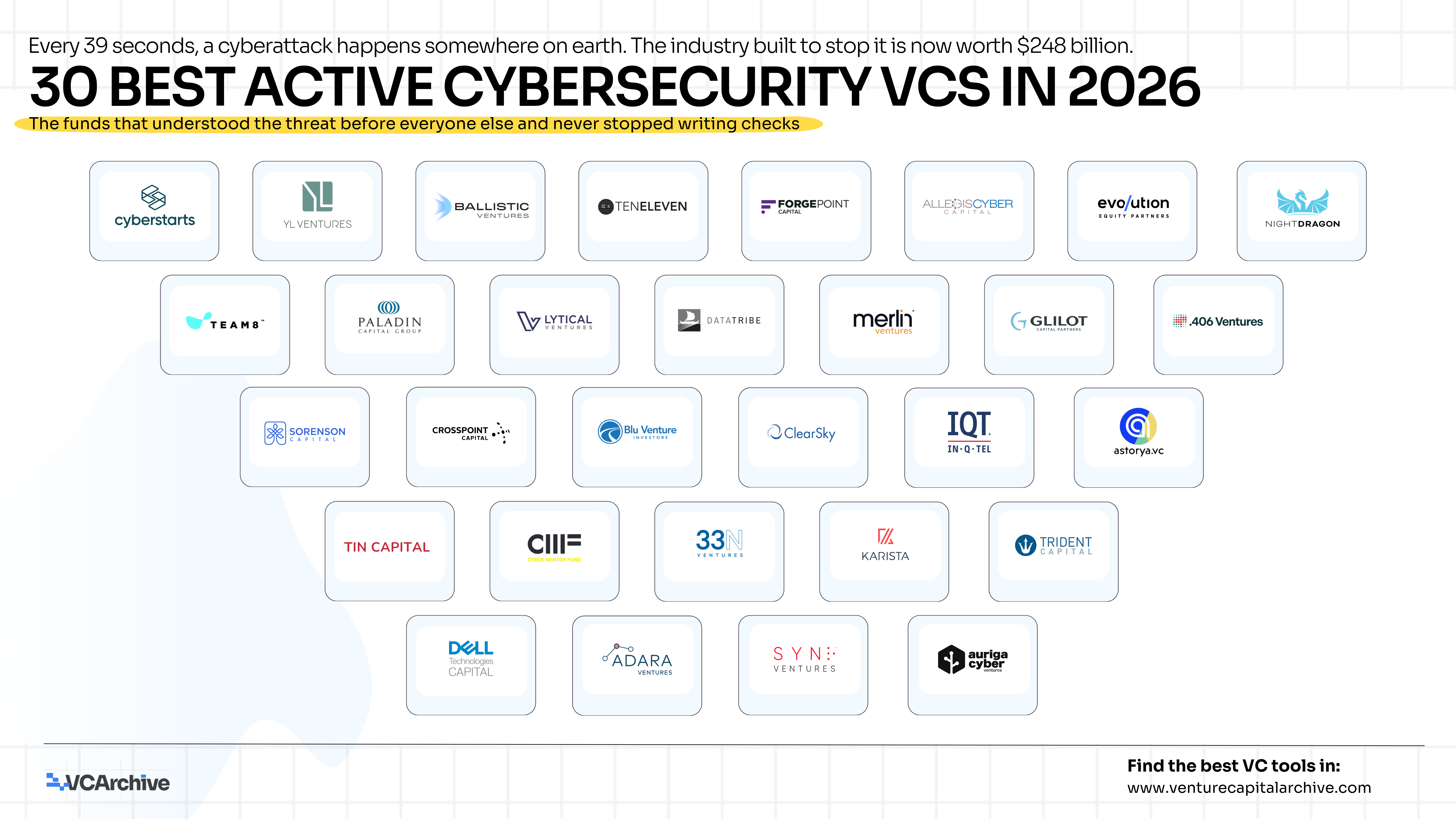
30 Best Active Cybersecurity VCs in 2026
Every 39 seconds, a cyberattack happens somewhere on earth. The question is not whether your company will be targeted. It is whether you will notice before the damage is done.