
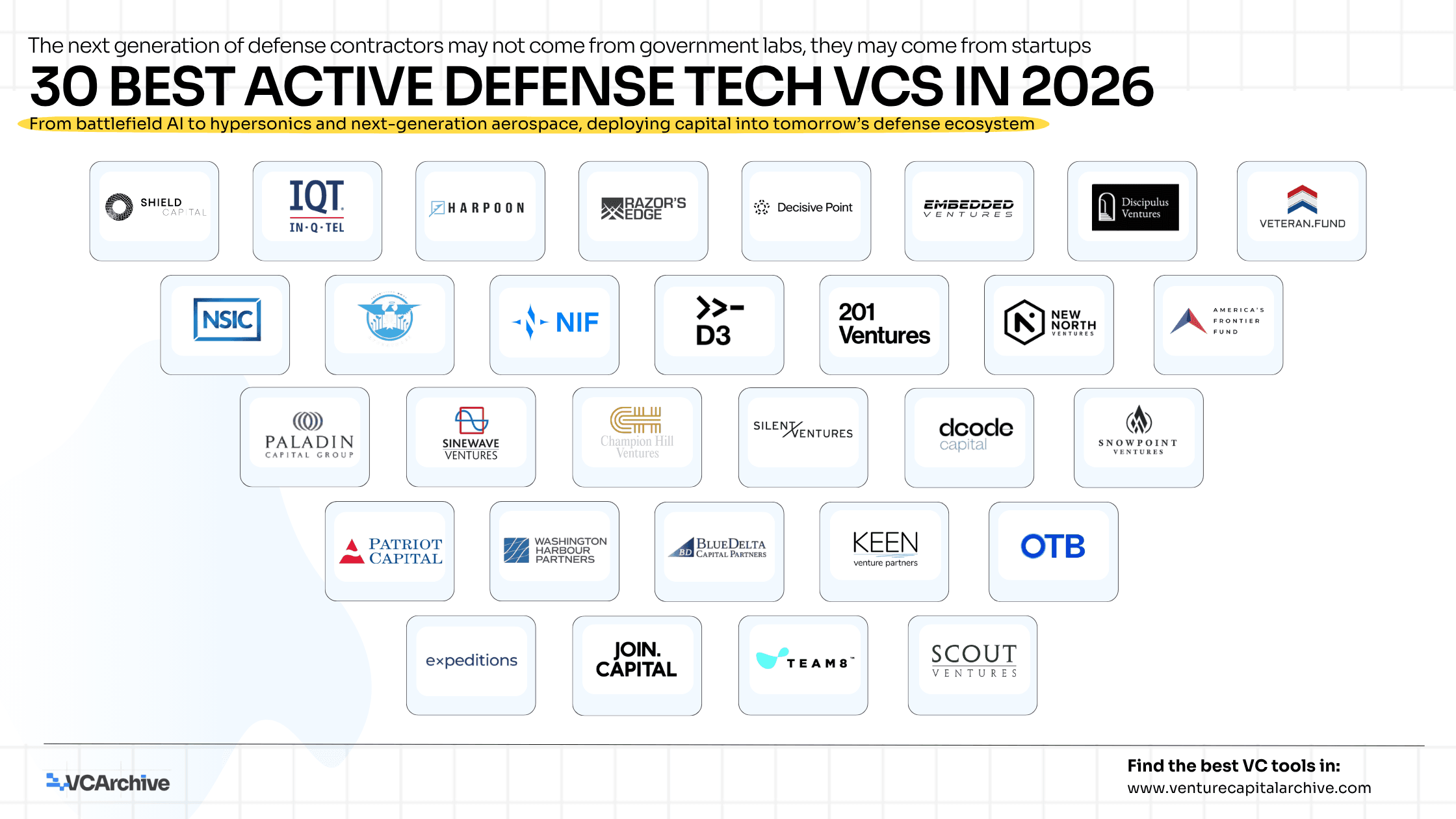
30 Best Active Defense Tech VCs in 2026
Most people think defense technology starts with the military but increasingly, it doesn't.
The drone flying over a battlefield may have started life inspecting wind turbines. The satellite tracking military activity may have originally been built to monitor crops. The AI model processing intelligence reports may have first been trained to help enterprises automate paperwork.
That reversal is one of the most important shifts happening in defense today.
For most of the twentieth century, technology flowed from military applications into civilian life. GPS, the internet, and jet engines all followed that path. Governments funded research, defense contractors built products, and eventually the commercial world adopted them.
Today, the flow often runs in the opposite direction.
Some of the most strategically important technologies in the world are being built by startups solving commercial problems first and military problems second.
Investors call this dual-use technology.
The rest of us should probably call it the future of defense.
Why the old defense playbook stopped working
For decades, the defense industry was remarkably predictable.
If a government wanted new military capabilities, it turned to a relatively small group of contractors. Those companies had the relationships, the expertise, the manufacturing capacity, and the security clearances needed to build what militaries required.
That model worked because the most advanced technology often existed inside government-funded programs.
Today, that is no longer true.
The world's leading AI systems are not being developed by traditional defense contractors. Neither are the most advanced autonomous systems, cybersecurity platforms, computer vision models, robotics technologies, or satellite networks.
They're being built by startups.
That creates a strange situation. Governments increasingly rely on technologies developed outside traditional defense ecosystems, while startups find themselves supplying capabilities that would once have been built exclusively for military customers.
The boundaries are becoming increasingly blurred.
A defense company can look like a software company.
A software company can become a defense company.
And sometimes they are the same thing.
The war in Ukraine changed the conversation
Every generation gets a conflict that forces people to rethink military technology.
For this generation, it was Ukraine.
The war demonstrated something that had been building for years but had not yet become obvious to most investors.
Modern warfare increasingly rewards speed, adaptability, software, and autonomy.
Small drones destroyed assets worth millions of dollars. Commercial satellite networks became critical intelligence infrastructure. Software updates could influence battlefield outcomes faster than traditional procurement cycles. Technologies developed for civilian markets suddenly became essential military assets.
The lesson was difficult to miss.
The future battlefield would not be defined solely by tanks, aircraft, and warships. It would also be shaped by algorithms, sensors, data platforms, autonomous systems, and communications infrastructure.
That realization changed how governments viewed startups.
It also changed how venture capital viewed defense.
Why venture capital suddenly cares
For years, many investors avoided defense altogether.
Some saw it as politically sensitive. Others believed government sales cycles were too slow. Many assumed the market was too niche to produce venture-scale outcomes.
Then the numbers started becoming impossible to ignore.
Defense spending across NATO countries surged. Governments announced hundreds of billions of dollars in modernization programs. Europe began rebuilding capabilities after decades of underinvestment. National security moved from foreign policy discussions into boardroom conversations.
At the same time, a new generation of founders was building companies that looked far more scalable than traditional defense businesses.
Instead of relying on a single government customer, they sold into commercial markets and defense markets simultaneously.
Instead of waiting years for contracts, they generated revenue from enterprises while developing capabilities attractive to governments.
The economics became far more attractive.
So did the opportunity.
The most interesting defense startups don't look like defense startups
This is where many people still get confused.
When they hear "defense tech," they imagine missiles, fighter jets, and armored vehicles.
Those categories remain important, but they are no longer the whole story.
Some of the most exciting companies in the sector today are building:
- AI systems for intelligence analysis and decision-making
- Autonomous drones and robotics platforms
- Cybersecurity infrastructure
- Space and satellite technologies
- Advanced manufacturing systems
- Intelligence and surveillance software
- Secure communications networks
- Next-generation logistics platforms
Most of these businesses can thrive without military customers.
That is precisely what makes them valuable.
The commercial market pays for rapid innovation. Defense customers benefit from the results. Everyone moves faster.
The investors who saw it coming
The firms on this list understood this shift earlier than most.
Some were investing in defense long before it became fashionable. Others entered through aerospace, cyber, deep tech, or industrial technology and gradually expanded into national security. Many backed companies years before governments fully appreciated how strategically important those technologies would become.
What they share is a common belief.
The next generation of defense champions will not necessarily emerge from traditional defense ecosystems. They will come from founders building technologies with applications across both civilian and military markets.
The best investors recognised that before everyone else.
The list is the map
Every technological era creates a new category of strategic investors.
The internet created investors who understood software before software became mainstream. Mobile created investors who saw platforms before platforms dominated the economy. Artificial intelligence is creating its own generation today.
Defense technology is doing the same.
The firms below are not simply investing in military applications. They are investing in autonomy, cybersecurity, aerospace, robotics, manufacturing, communications, intelligence systems, and artificial intelligence. In other words, they are investing in the technologies that will increasingly determine how nations compete, protect themselves, and project power.
For founders building in defense, dual-use technology, aerospace, cyber, AI, or autonomy, these are some of the most important firms in the ecosystem.
The future of defense will not be built exclusively by governments or traditional contractors.
A growing part of it is being built by startups.
And these are the investors funding them.
30 Best Active Defense Tech VCs in 2026











Rows per page
More from Dario Villena
View author profile
Top 25 VC & Startup Influencers You Should Be Following
The thought leaders worth turning notifications on for
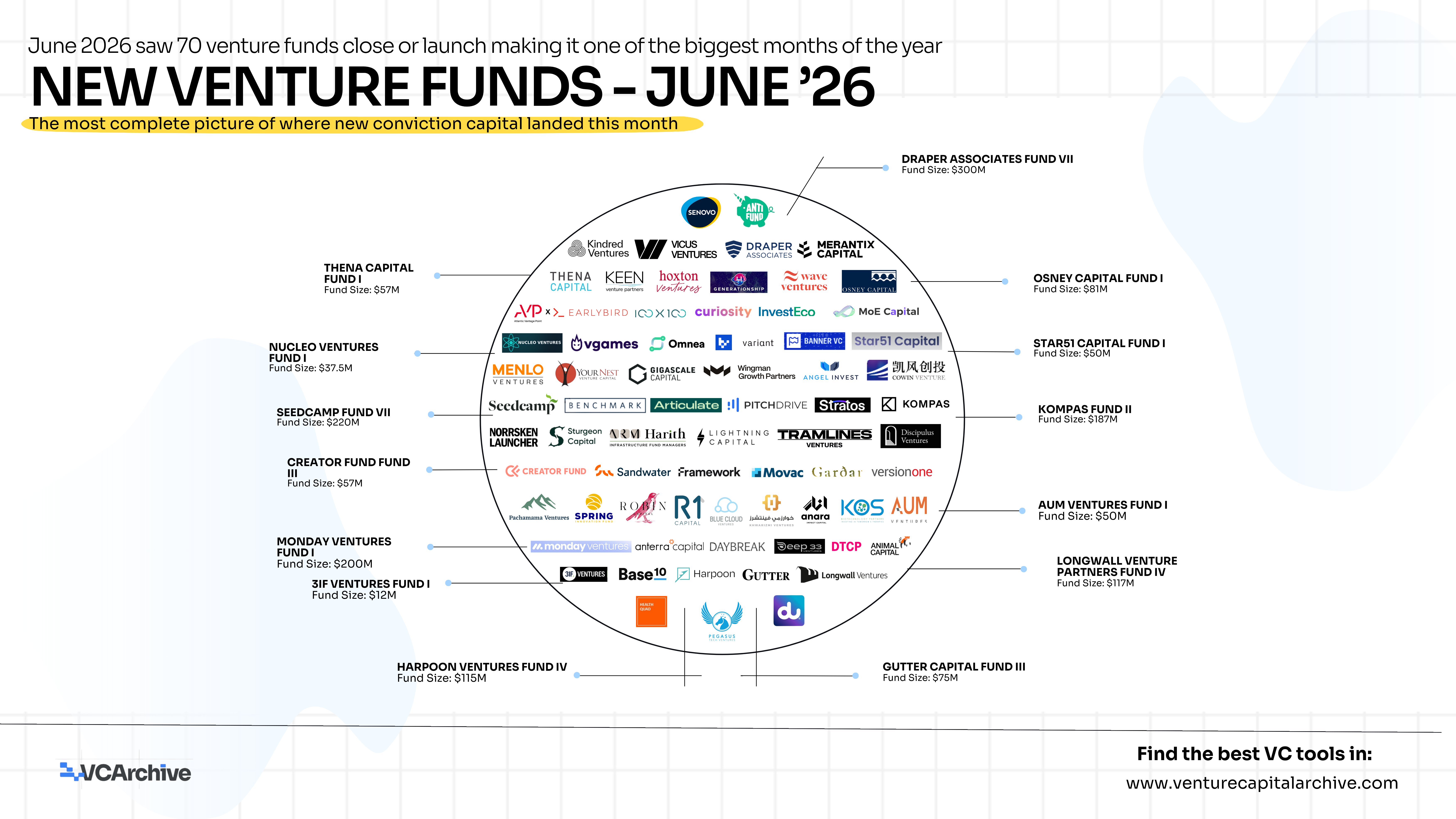
New Venture Funds - June 2026
70 funds walked into June 2026 each one convinced it knows something the others don't
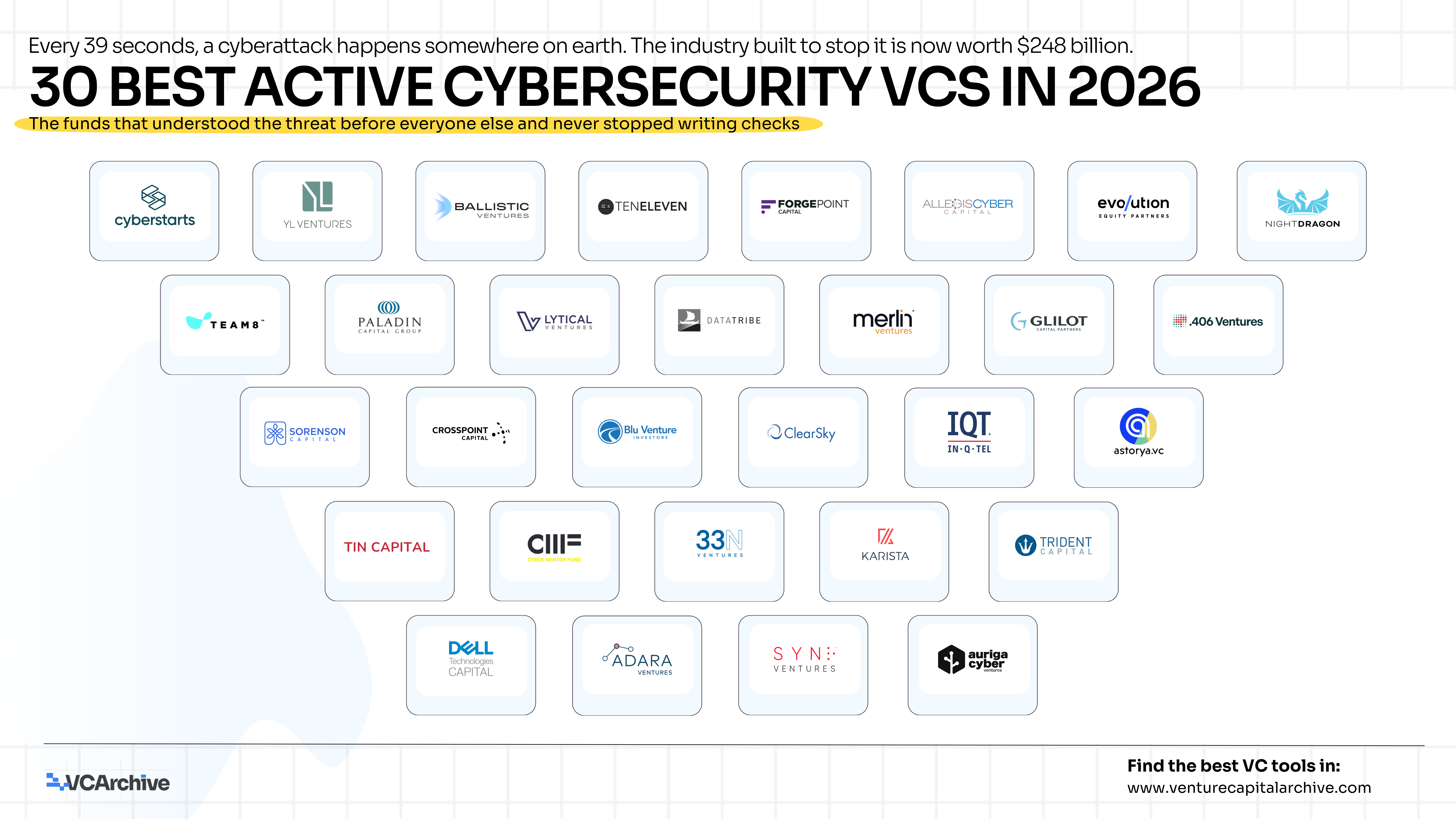
30 Best Active Cybersecurity VCs in 2026
Every 39 seconds, a cyberattack happens somewhere on earth. The question is not whether your company will be targeted. It is whether you will notice before the damage is done.