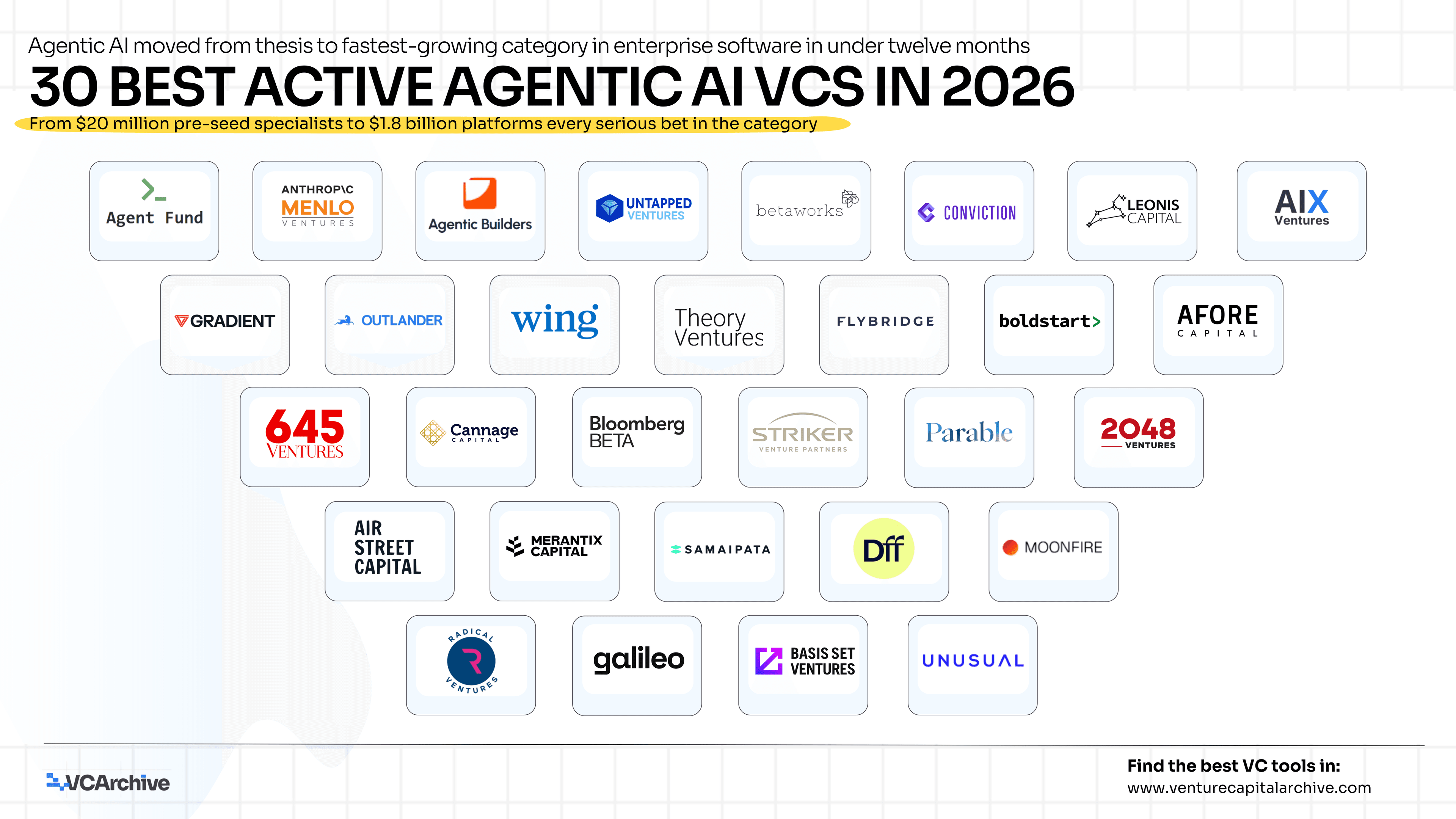
30 Best Active Agentic AI VCs in 2026
Something fundamental changed in how enterprises think about AI between late 2024 and mid-2026.
For the first two years of the generative AI wave, the dominant use case was the copilot. A tool that sits alongside a human, suggests things, drafts things, summarises things. Useful. Productivity-enhancing. Not transformational.
Agentic AI is the next thing. Not a better copilot but a different category entirely. An AI agent plans, decides, and executes multi-step tasks autonomously. It does not suggest what to write in your email. It reads your emails, identifies the ones that need responses, drafts them, schedules the follow-ups, and logs the outcomes without being asked for each step. The distinction sounds subtle. The commercial implications are not subtle at all.
The agentic AI market is growing 31x in a decade, from $7.6 billion today to $236 billion by 2034, at a compound annual growth rate exceeding 40%. No enterprise technology sector has grown this fast since the early cloud migration wave and unlike cloud, agentic AI affects every function simultaneously.
The adoption gap that defines the market right now
Here is the number that matters most for anyone building in this category.
79% of enterprises have adopted AI agents in some form, yet only 11% run them in production.
79% adoption. 11% production. That gap is not a failure of the technology. It is the single largest commercial opportunity in enterprise software right now and it is exactly what the funds on this list are backing companies to close.
The pilot-to-production gap exists because building an agent that works in a demo is genuinely easy. Building one that is reliable, observable, secure, and auditable enough for an enterprise to run it unsupervised on consequential workflows is genuinely hard. That is where the real defensibility gets built. That is where the real money is flowing.
Investors have shifted money from general autonomy frameworks toward workflow execution, observability tooling, and vertical agents precisely because they address the pilot-to-production gap.
The funding story in numbers
The capital acceleration in this category is among the sharpest we have tracked in any sector.
In 2023, agentic AI startups raised just over $1.3 billion. In 2024 that was closer to $3.8 billion. By the first half of 2025 they had already taken in roughly $2.8 billion, annualising to somewhere around $6.5 to $7 billion for the year, roughly three quarters more than 2024.
Through April 2026, agentic AI companies raised $2.66 billion, a 144% increase over the comparable 2025 period, but across only 44 rounds. That is 39% fewer transactions to move 144% more capital. Average round size reached $155 million, nearly double the $82 million average from H1 2025.
What that compression tells you: investors are writing larger cheques into fewer, more established companies. Capital is not abandoning early-stage agentic AI - seed and Series A represent 69.5% of all deals, but only 24.5% of disclosed capital. The mega-rounds are going to companies that have already demonstrated product-market fit. The early-stage rounds are still happening, they are just not making the headlines.
The number of unique investors in the agentic AI market grew from approximately 20 in early 2025 to 82 by May 2026, with tier-1 investors growing from 9 to 26 in the same period. The category is no longer a small set of specialist or hype-driven bets. It now includes generalist venture firms, growth investors, strategic investors, accelerators, corporate venture arms, and domain-specific investors, which means both that category credibility is high and that crowding risk is real in the most obvious subsegments.
Where the capital is actually going
Not all agentic AI is funded equally. The sub-category breakdown reveals a lot about where investors think the real value gets built.
Vertical AI Agents lead the agentic AI market on both deal count and capital. The category captured 30 deals and $2.640 billion, equal to 50.9% of deals and 55.7% of disclosed capital. Agentic AI Applications raise the largest cheques per deal, with only 7 deals but $1.424 billion raised, a capital-share-to-deal-share ratio of 2.53x.
The implication is important for founders trying to position their company. A vertical agent that automates a specific, high-value workflow in a specific industry, whether legal document review, insurance claims processing, financial compliance auditing, or clinical trial coordination, is commanding larger cheques than a horizontal infrastructure play precisely because the commercial case is easier to prove and the switching costs are higher once deployed.
A few sub-categories worth understanding before you approach any fund on this list:
Vertical AI agents:
The category attracting the most capital by a significant margin. Specificity is the moat. An agent that does one thing extraordinarily well for one industry is more fundable right now than an agent that does many things adequately for everyone.
Observability and workflow execution:
These are the picks-and-shovels plays, the companies that make it possible for enterprises to trust and monitor what their agents are actually doing. Less glamorous than the agents themselves, often more durable as businesses.
Agent infrastructure and orchestration:
The control plane problem, how do you coordinate multiple agents working in parallel on complex tasks is still largely unsolved and attracting significant early-stage capital from the most technically sophisticated funds on this list.
Human-in-the-loop oversight:
Human approval is conspicuously underfunded as a standalone category, implying that oversight is being bundled into broader agent platforms, governance products, and vertical workflows rather than treated as a separate venture-backed market. That bundling creates opportunity for founders who understand that enterprise procurement of AI agents almost always requires a credible governance story.
The ROI case that enterprise buyers are making
For founders raising in this category, understanding what enterprise buyers are actually measuring is as important as understanding what investors are backing.
About 62% of organisations using agents say they expect returns above 100% on their investments, and the average expectation lands around 171%. By the end of 2025, organisations were spending around $37 billion on AI, roughly three times 2024 and about 6% of global SaaS spend.
The ROI expectations are high and the budgets are real. The constraint is not willingness to pay. It is the ability to deploy agents reliably enough that the CFO will sign off on them running unsupervised on consequential workflows. The companies solving that specific problem, reliability, observability, governance, security, are the ones closing the largest enterprise contracts and raising the largest venture rounds.
What makes this category genuinely different to back
The agentic AI sector shows 43.84% compound annual growth from 2025 to 2034, outpacing traditional AI and automation markets. Companies delaying adoption risk exponentially widening competitive gaps.
That growth rate is real. So is the risk of backing the wrong company in a crowded subsegment. The funds on this list that have built genuine domain expertise in agentic AI, that understand the difference between an agent that passes a benchmark and an agent that survives contact with an enterprise production environment, are the ones generating the best returns and the most useful partnerships for founders.
The 30 funds below collectively manage north of $15 billion in assets, cover every stage from pre-inception cheques into founders still naming their company to growth-stage positions in category leaders with nine-figure ARR, and span geographies from San Francisco and New York to London, Berlin, Madrid, Amsterdam, Toronto, and Melbourne.
For any founder building in agentic AI, the right fund on this list is the one whose portfolio companies solve adjacent problems to yours, whose GPs can name the specific deployment challenge your enterprise customers face, and whose network can open the right enterprise doors at the right moment. That specificity is worth more than brand, AUM, or the size of the cheque.
Use the list as a map, not a menu.
30 Best Active Agentic AI VCs in 2026







Rows per page
More from Dario Villena
View author profile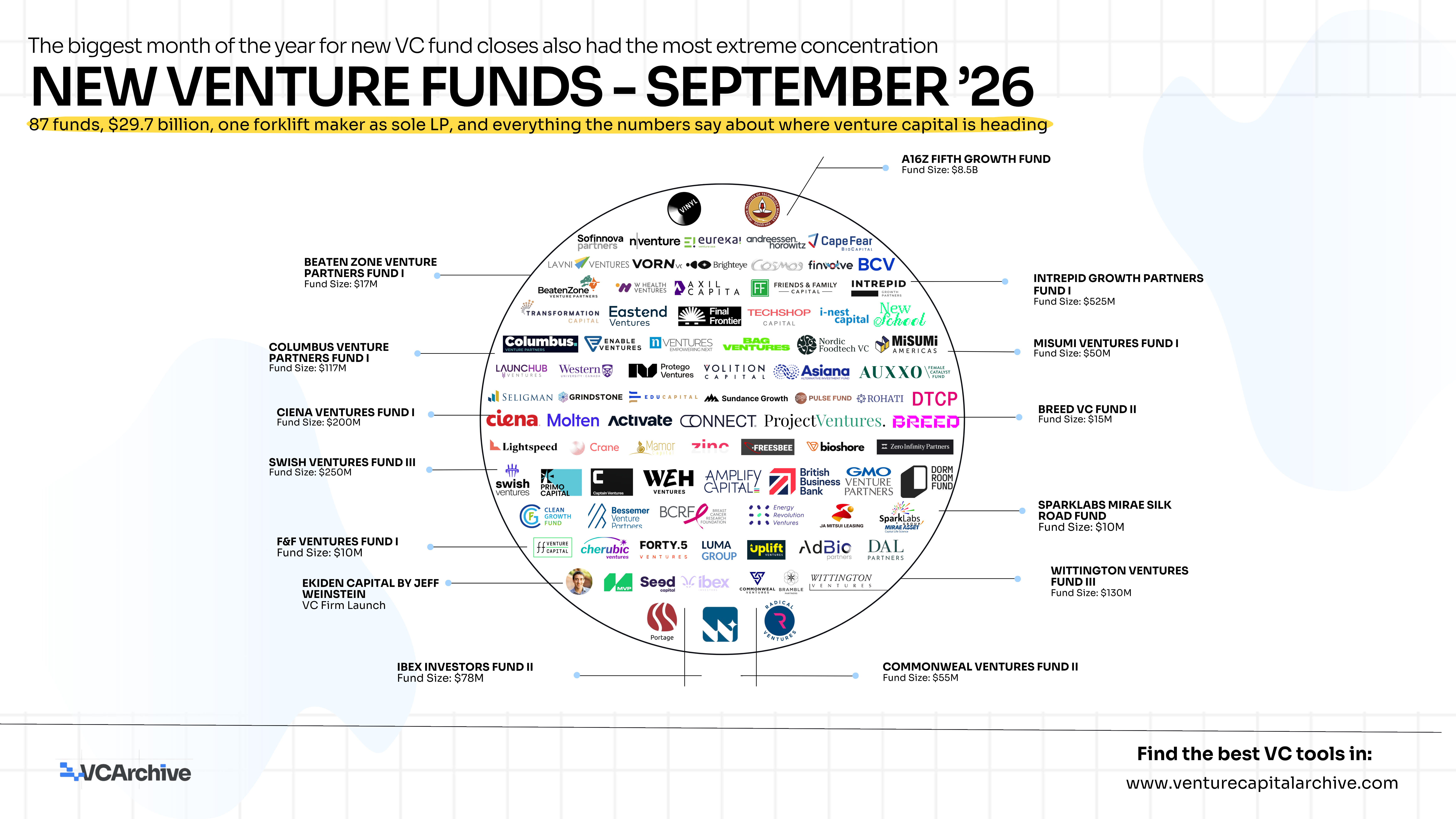
New Venture Funds - September 2026
The biggest fund formation month of 2026 also had the most extreme concentration we have tracked.
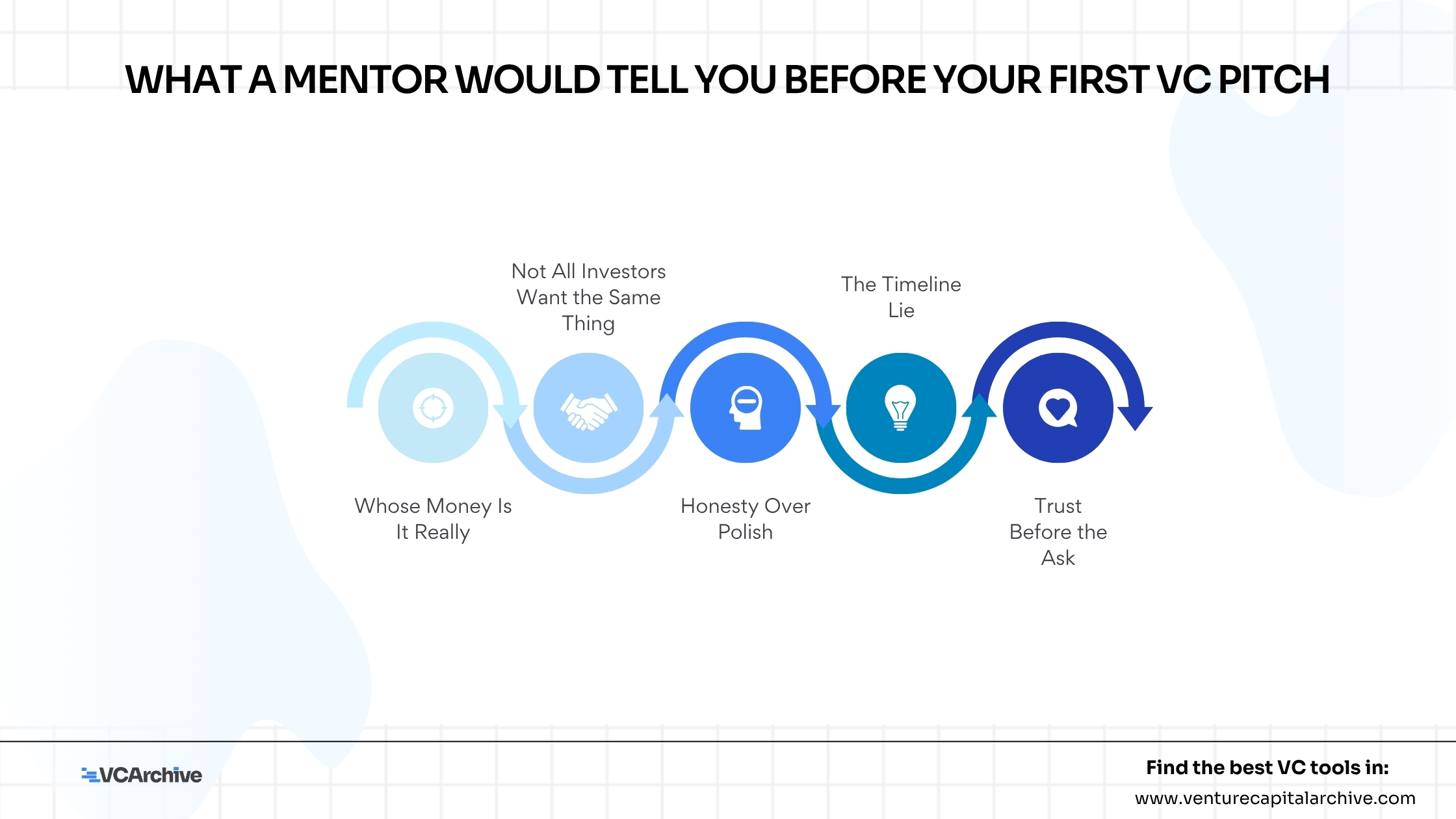
What a Mentor Would Tell You Before Your First VC Pitch
A practical guide to understanding how venture capital works, from LP capital and investor incentives to fundraising and relationships.
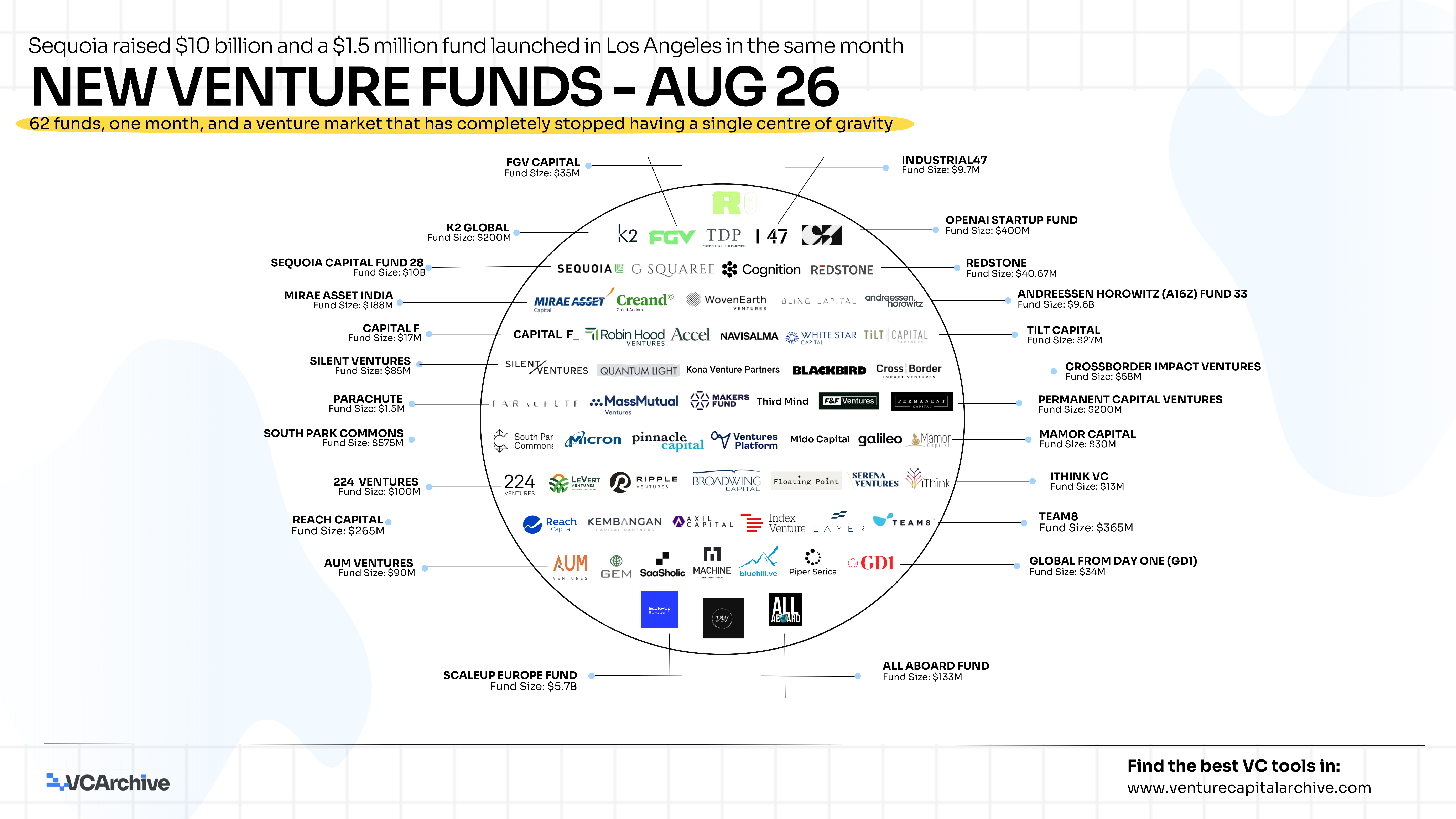
New Venture Funds - August 2026
a16z closed $9.6 billion. A Brussels solo GP closed $10 million. The OpenAI Startup Fund closed $400 million. All in August 2026.