
Understanding Private Equity: How It Works and Who It's For
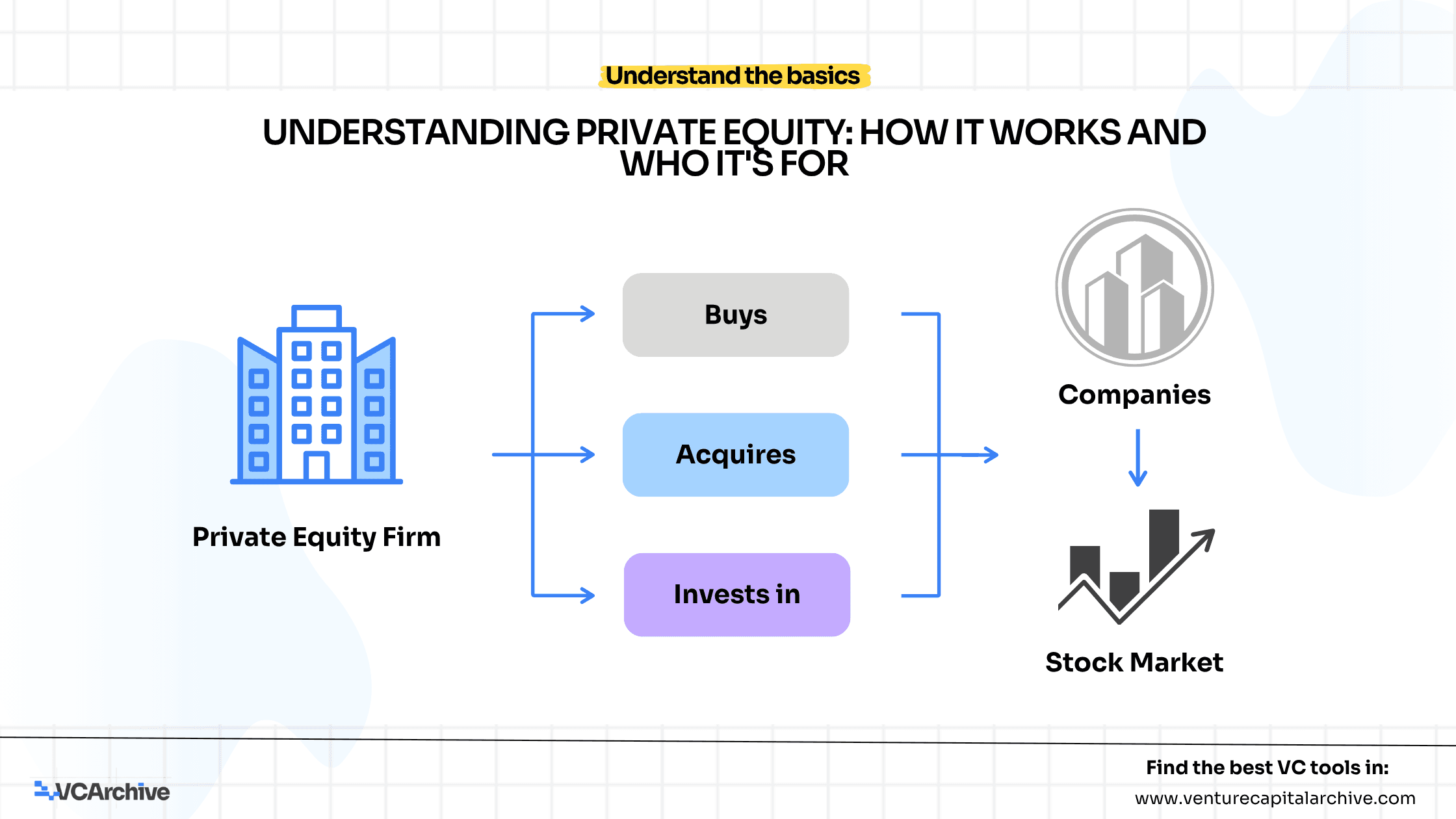
Understanding Private Equity
The stock market isn’t the only way to invest in businesses.
Private equity offers an alternative — one that happens away from daily price swings and trading screens.
In simple terms, it means investing in companies that are not listed on the stock exchange.
Instead of buying shares in Apple or Microsoft, investors take ownership stakes in private firms — from fast-growing startups to industrial or infrastructure projects.
Because these companies are private, their valuation isn’t set minute by minute. Prices are updated periodically, based on performance. This structure gives investors something rare today: a long-term perspective.
Why Private Equity Is Growing
Private markets have become one of the fastest-growing areas of global finance.
According to Preqin, assets under management are projected to double from $9.3 trillion in 2021 to over $18.3 trillion by 2027.
In Spain, private equity and venture capital reached a record in 2022, with €8.7 billion invested across more than 900 transactions (SpainCap).
The reason is simple: investors seek diversification, lower volatility, and stronger returns.
Historically, private equity has achieved 10–15% annual returns, compared to 7–9% for public markets.
How It Differs from Public Markets

Who Can Invest
Until recently, private equity was limited to institutions like pension funds or family offices.
Now, regulatory changes across Europe have made it accessible to individuals who meet certain criteria:
- Minimum commitment: around €10,000 (previously €100,000+).
- Exposure limit: individuals with less than €500,000 in total assets can invest up to 10% in private markets.
- Advisory requirement: under MiFID II, investors must receive suitability advice.
- Capital calls: funds request money gradually, not all at once.
This model turns private equity into a structured, long-term investment plan rather than a single purchase.
Main Advantages of Private Equity Investing
1. Access to the 95%
About 95% of companies worldwide are private.
Public stock markets only represent a fraction of global enterprise value. Private equity opens exposure to that hidden majority.
2. Lower Volatility
Without daily price updates, private equity shields investors from emotional market swings and promotes a calmer, long-term mindset.
3. Independence from Interest Rates
Strategies like infrastructure or private debt provide stable cash flows that are less sensitive to central bank rate changes.
4. Professional Management
Top-tier managers actively improve companies rather than passively hold shares, often generating “alpha” — excess returns over the market average.
Risks to Consider
Private equity comes with trade-offs you should understand:
- Illiquidity: capital remains tied up for 7–12 years.
- Early underperformance: returns may start negative before improving (the “J-curve”).
- Manager dependence: outcomes vary greatly depending on fund quality.
- Potential losses: diversification reduces but doesn’t eliminate risk.
In this asset class, the manager matters more than timing — careful due diligence is essential.
How to Get Started with Private Equity
- Choose a regulated fund manager — ensure it operates under financial supervision (e.g., CNMV in Spain).
- Complete a suitability test — confirm your goals and risk tolerance align.
- Select a strategy:
- Venture Capital → early innovation
- Growth Equity → scaling firms
- Buyouts → mature companies
- Infrastructure → energy, telecom, logistics
- Private Debt → lending to non-listed firms
- Commit gradually — funds call capital in stages as they deploy investments.
Why Private Equity Matters for Modern Investors
Private equity is becoming a cornerstone of modern investing.
As public markets face volatility and concentration, private markets offer long-term growth, diversification, and real economic impact.
For investors, it's not just an alternative — it's a way to participate in the growth of real companies and industries, with patient capital that builds lasting value.
Want to dive deeper into the data, trends, and real deals behind venture capital?
Check out our Annual Venture Capital Report — a complete guide with exclusive insights, top funds, biggest rounds, and the stories shaping the future of innovation.