
Understand the Basics: What is Venture Capital?
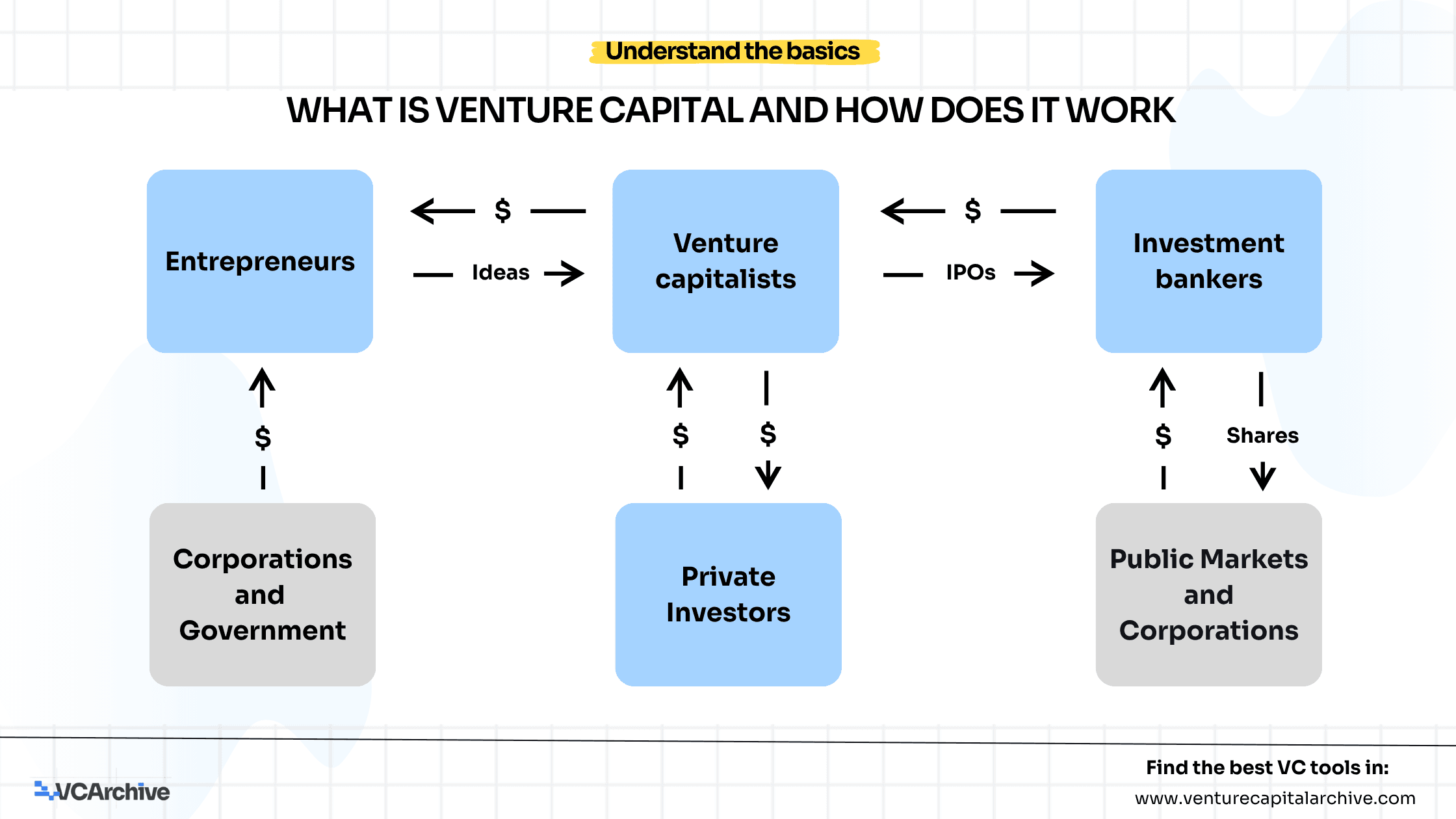
Imagine you have an ambitious idea swirling in your head: a clear vision, a disruptive project... but you're missing the one essential thing to make it real: money. This happened to Daniel Ek, the founder of Spotify. In the beginning, he only had a simple idea to revolutionize how we listen to music. He didn't have big resources, but he did have a powerful vision. That's when the first venture capital investors came in—people and funds who believed in his potential—and bet big on him. Thanks to that initial boost, Spotify went from being a dream to transforming an entire industry.
Venture capital is exactly that: investors who fund young and innovative companies (usually startups) that aren't yet profitable, but have explosive growth potential. In exchange, they get an equity stake in the company and take on the risk of losing everything if the project fails.
Where Does the Concept of Venture Capital Come From?
Although the term sounds modern and tied to Silicon Valley, risk capital has ancient roots. It emerged in the 17th and 18th centuries, when European merchants pooled funds to finance maritime expeditions to distant lands. They invested in building ships, hiring crews, and loading exotic goods.
- If the ship returned with spices, precious metals, or silk, everyone multiplied their investment.
- If it sank or was attacked, they lost everything.
It was the first model of shared risk for an uncertain reward, but with high potential.
This spirit was reborn after World War II. Engineers and scientists who had developed military technologies wanted to apply them to civilian life. Georges Doriot, a Frenchman settled in the U.S., was the pioneer: in 1946, he founded the American Research and Development Corporation (ARDC), the first modern venture capital fund. His goal was to support veterans and scientists with transformative tech projects.
His biggest success: investing $70,000 in Digital Equipment Corporation (DEC), which years later was worth over $350 million.
In the following decades, the model exploded in Silicon Valley, powering giants like Intel, Apple, and Genentech. Thus, venture capital became the financial engine of global technological innovation.
Why is Venture Capital Key to Progress?
Venture capital has proven to be one of the most powerful engines of global innovation and wealth creation.
Over the past two decades, it has backed more than 100,000 startups worldwide, generating over $22 trillion in enterprise value. It has shaped the companies that define our daily lives — from Spotify and Airbnb to Tesla and Moderna.
According to global benchmarks, top-performing VC funds have achieved average annual returns above 25–30%. This makes it one of the highest-yielding asset classes in modern finance.
Beyond the numbers, venture capital drives technological progress, job creation, and entire new industries.
That’s exactly what Venture Capital Archive was built to track, document, and understand.
Our mission is to map the data, trends, and people behind this dynamic ecosystem — showing not just who funds innovation, but how it happens and why it matters.
In an era where capital shapes the future, Venture Capital Archive connects the dots between vision, investment, and impact. We help investors, founders, and thinkers navigate the forces that move innovation forward.
If you're thinking about seeking venture capital investment for your startup, remember: it's not just about numbers, but about convincing with your vision. Ready to bet on your idea? The next unicorn could be yours!
Want to dive deeper into the data, trends, and real deals behind venture capital?
Check out our Annual Venture Capital Report — a complete guide with exclusive insights, top funds, biggest rounds, and the stories shaping the future of innovation.