The Art of a Great Introduction
As a pre-seed and seed VC, my core job is meeting new people.
At the busiest points in the VC calendar, I get between 5–15 new introductions a day. Sometimes in person. Mostly via my inbox.
A reputation for making thoughtful, high-quality introductions is one of the most valuable things you can build in VC. Done well, an intro creates something useful out of thin air, a relationship that might turn into finding a new port co, a great hire, a co-founder match, and many more valuable things. Five minutes of effort for potentially limitless downstream value for all parties.
Which is why a thoughtless intro can land badly. The opposite of a great introduction isn’t a bad one, it’s one that makes the recipient feel like a prop in someone else’s networking strategy.
The good
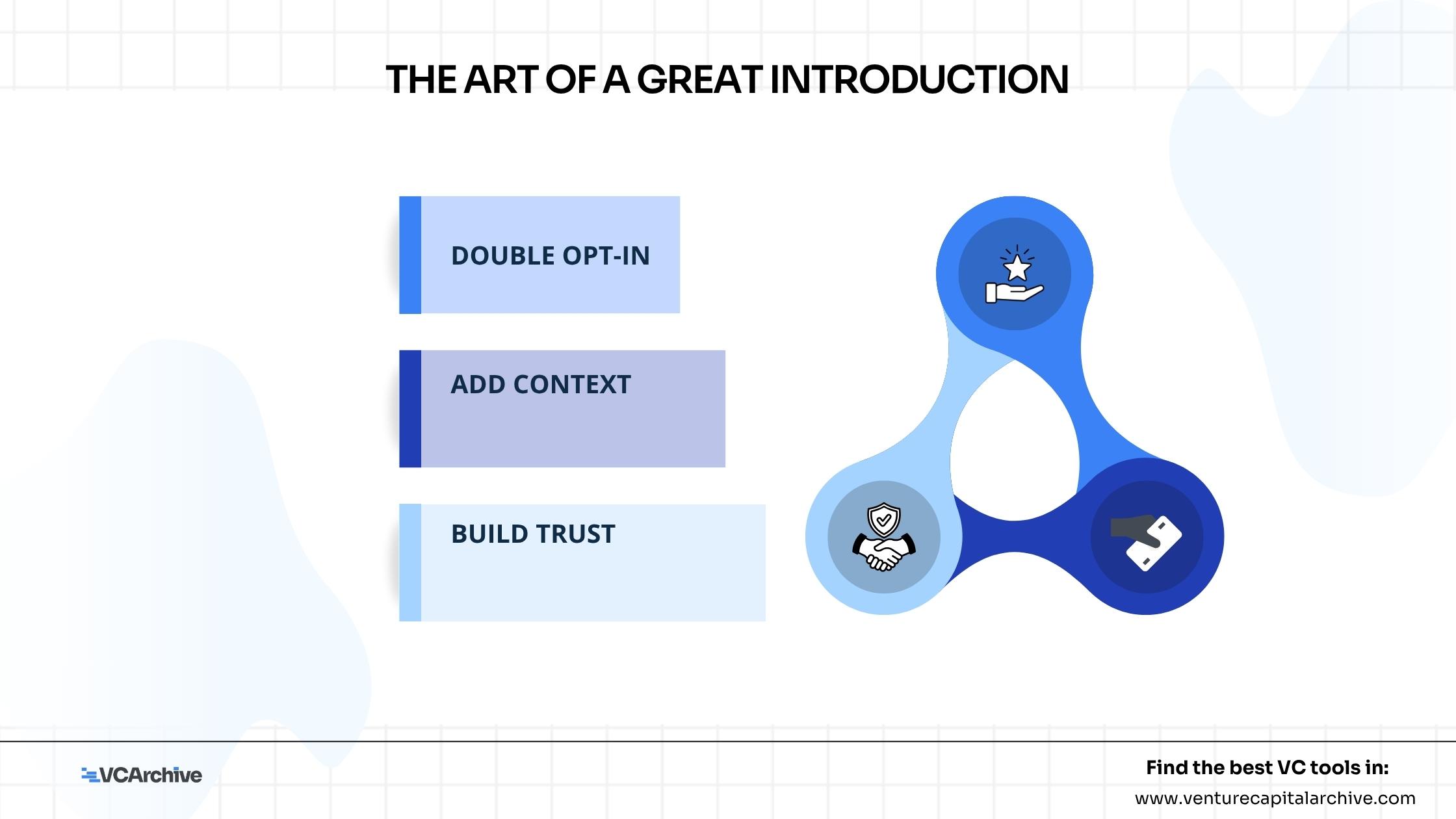
My hard rule is double opt in. Always. It’s a bit more work for the introducer but it is respectful of the other parties’ time. I say ‘I think you should probably connect with Person X, I’ll see if I can help make that happen’. I then reach out to Person X, explain why I think they should connect to the prospective new contact and share a LinkedIn page or bio for the person I’d like to introduce.
My experience is 9/10 this results in a response and a confirmation they also see the value in connecting. I then send an email connecting Person X and the prospective new contact which gives a sentence to each on why the other is relevant and reshares the LinkedIn profiles. When you are constantly being introduced to new people it can be easy to forget or misremember the context. Putting it all together takes 2 minutes and supports the goal that both parties are motivated to ‘catch the ball’, and set up a call and know where to start the conversation when they do meet. Bonus points for the first to reply moving the introducer to BCC and for the new contact feeding back to the introducer that the call happened and it was a good introduction.
The bad
Too often what happens instead is an unsolicited email to Person X, with the prospective new contact already in cc. It’s quick and easy for the introducer, but it shifts all the work to Person X. Now they have to decide, in front of the prospective new contact, whether they want to take the meeting.
Saying no feels rude, saying yes feels forced. The introducer has saved a few minutes of effort but outsourced the awkwardness to everyone else.
And I’m deducting points for messages that say ‘you should meet because you are both awesome’. This might be true but it doesn’t give any momentum to the new relationship. Why should these people meet, and why should they make time to do this now?
The ugly
The worst scenario is a BCC misfire. The introducer sent Person X an email that appears to be asking if they’d like to connect to the prospective new contact. But the prospective new contact is on BCC, doesn’t realise and hits reply all ‘outing’ the introducer.
Now Person X is in the uncomfortable situation of either replying to a pitch they never agreed to receive, or ignoring the email and looking rude. Meanwhile the new contact, without realising it, has just revealed two things in their very first impression: that they don’t read emails carefully, and that the introducer was trying to slide them in through the back door. Nobody comes out of this looking good.
The fix
If you don’t already have a double opt-in policy, consider updating your mental model.
Giving people the option, rather than putting them on the spot, is part of what it means to take long-term relationship-building seriously in a small and highly connected industry.
Good introductions compound. Careless ones quietly cost you.
This article was originally published on Medium by Nicola Sinclair and has been sourced here for educational purposes
More from Nicola Sinclair
No other articles from this author yet. Visit their profile.