Why Senior VC Partners Are Leaving Big Firms for Smaller Funds
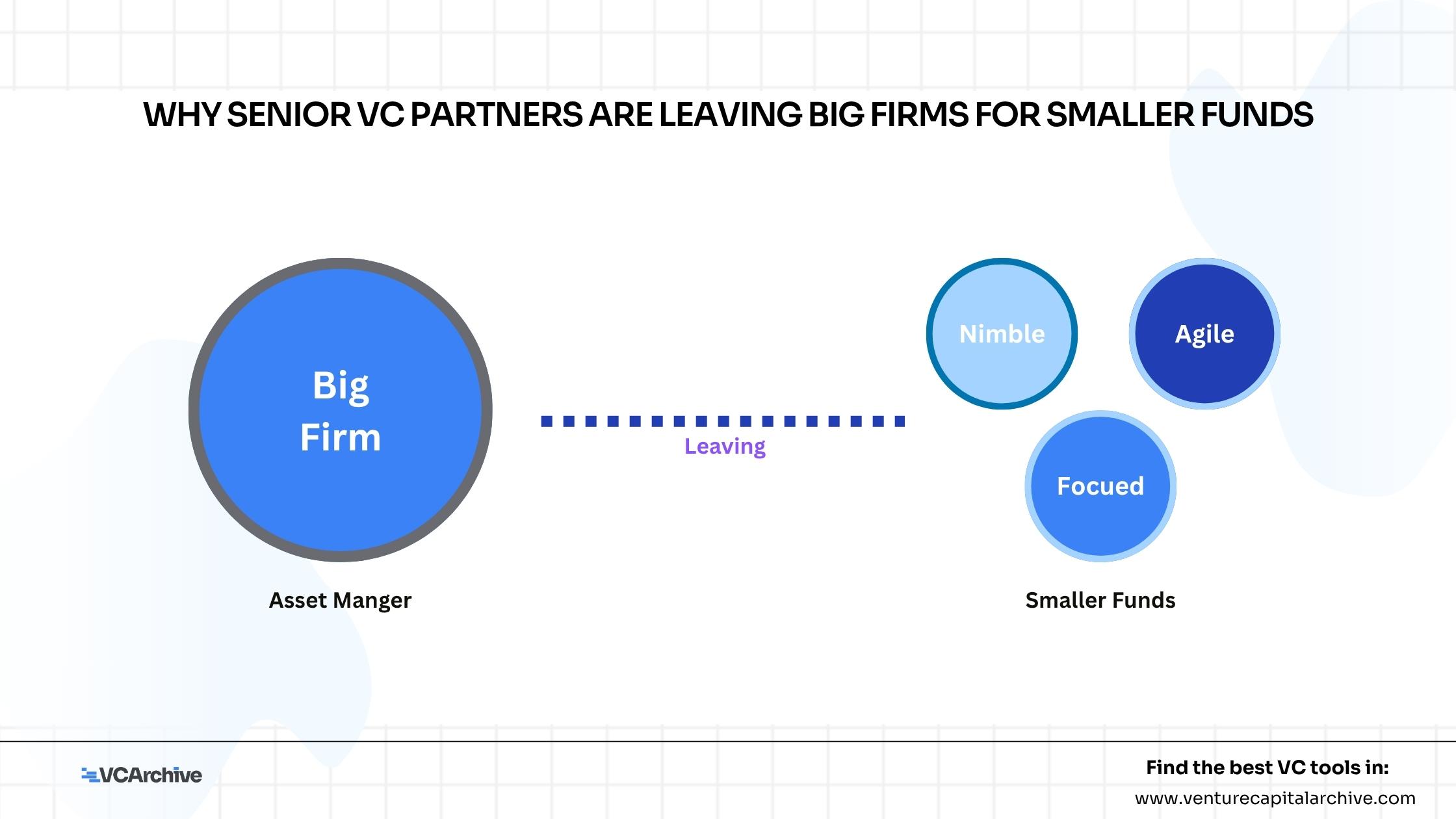
For decades, big venture capital firms were the financial straw that both stirred and sipped the heady brew of startup success in Silicon Valley and across the U.S. But now some of those bigger funds are suffering from their own stunning growth and accumulated wealth. One indicator is the growing number of top senior partners walking away in search of new horizons, including VC startups of their own.
What began as a trickle of departures from heavyweight VC funds about a year ago accelerated into a stream throughout 2025 and into this year. While turnover rates among junior executives from those firms remains an industry feature, decisions by senior partners to quit what were long considered lifetime positions is a break with the sector’s past. That, according to several recent reports on the outward flow, reflects significant changes in both the evolution and operation of startup financing, and the priorities of some of its heavier hitters.
Observers say the destinations of many senior partners exiting big VC firms often reflect their reasons for leaving.
Those landing spots are frequently smaller funds or new firms that departing executives are starting on their own. Examples of that included former Lux Capital general partner Bilal Zuberi, ex-Bessemer Venture Partner executive Ethan Kurzweil, Index Venture’s Mike Volpi, and several other top managers making the move to launch new and more nimble outfits.
A major motive is these VC veterans’ attempt to recapture some of the excitement and professional purpose they experienced earlier on finding, analyzing, and backing promising startups and helping them grow. According to insiders, that’s frequently a reaction to many large firms now focusing on the slower, stodgier work of managing billions in investments they’ve already made, rather than pursuing new young entrepreneurs seeking finances.
“I think we’ve seen a big sea change over the course of the last decade that has led to the venture (capital industry) turning into asset management more broadly, and I think that’s actually the crux of this issue,” Equal Ventures founder and managing partner Rick Zullo told CNBC, adding many of those firms now resemble Goldman Sachs or Blackstone more than their own, initial incarnations. “That’s leading to some cultural dissonance between folks who want to be pure play venture capital and folks who want to become asset management firms.”
That’s likely a result of several recent changes in venture capital itself.
The first is that older, larger firms got bigger even faster than others during the post-pandemic investment boom, and soaked up most of the action. As a result, says Pitchbook, just nine of the largest U.S. VC funds raised about half of the total $35 billion in new financing for investments last year.
But that same growth, observers say, has made those giants more risk averse, slower in making and acting on decisions, and generally further removed from the grassroots startup environment they used to connect with more closely.
One reflection of that was VC funding of early-stage startups dropping by 18 percent in the first half of 2024 compared to the previous year, and declining 24 percent in the second semester. And more interactions with promising young businesses and founders were routinely handled by junior executives than senior partners.
That kind of increasing separation, Zuberi told CNBC, was part of his thinking in leaving Lux and starting his own Red Glass Ventures firm to get closer to business creators again.
“If I can write early conviction checks, I would have high ownership, and if … companies do well, that’s true alpha returns,” he said.
The flow has also increased with the rise of platforms like AngelList and Carta, which allow both senior and junior partners striking out on their own to link up with potential investors and work faster toward doing deals.
That has resulted in a proliferation of firms created by VC veterans focusing on certain types of businesses they view as particularly promising—such as Zuberi’s fund “investing at intersection of AI and the physical world.” That has been matched by less experienced people creating more general firms for early-phase startups needing help.
“(T)here’s been an explosion of (small) venture capital firms,” Alexandre Lazarow, managing partner of Fluent Ventures told CNBC. “I think we’ve seen the rise of specialization and the rise of regionalization in tech.”
Zullo agrees, and thinks there will be more of that in the coming months.
“There’s a bunch of incredible venture capitalists at some of these very large-scale firms that have had tremendous success, who are now deciding that they don’t want to be asset managers,” Zullo told the business channel. “(T)hey don’t want to deal with the bureaucracy or corporate structures. They just want to go back to the basics.”
What do all these shifts mean for entrepreneurs looking for funding?
The first is that there are more potential VC backers to pitch to than before, but most are managing tens or hundreds of millions of dollars instead of billions.
Meanwhile, though investors today are still looking for big growth potential as they did before, they don’t prioritize it if it means delayed profitability. Scaling should be a direct path to generating income, not an aim to get bigger to justify further VC funding.
This article was originally published on Inc Magazine by Bruce Crumley and has been sourced here for educational purposes
More from Bruce Crumley
No other articles from this author yet. Visit their profile.