This Is The Only Way To Break Into Venture Capital In 2026
I get these emails all the time. They usually go something like:
“I’m a smart student interested in venture capital. I’d love an internship at your firm.”
I rarely reply to those nowadays.
If you’re one of the ghosted students, this article is for you.
I’ll tell you exactly what you need to do to look attractive to venture capitalists.
VC used to be bullish on smart students majoring in economics or data analytics.
The traditional path looked like this:
You’d start as an analyst. You weren’t expected to bring deal flow — your job was to analyze what partners brought in, help with market research, due diligence, and closing.
Then you’d get promoted to associate, with a bit more startup-facing exposure.
Eventually, you’d become a principal, expected to lead deals.
If you were lucky, good, and persistent — you might become a partner.
This is not how it works anymore.
Analyst roles are no longer in demand.
VCs now use AI tools for most of the repeatable work analysts used to own.
So how do you start a career in venture if the entry roles are disappearing?
Bring unique deal flow.
That’s it.
That’s the trick.
That’s your only real shot at joining a VC firm in 2026.
If VCs don’t need you to go through decks, build competitive tables, or run due diligence spreadsheets anymore, then the only thing you can bring — that they don’t already have — is deals.
Ideally, deals they haven’t seen before.
“Alright, but I’m 20. I have no experience. How am I supposed to know top upcoming entrepreneurs?”
You don’t.
And that’s exactly your job: get to know them.
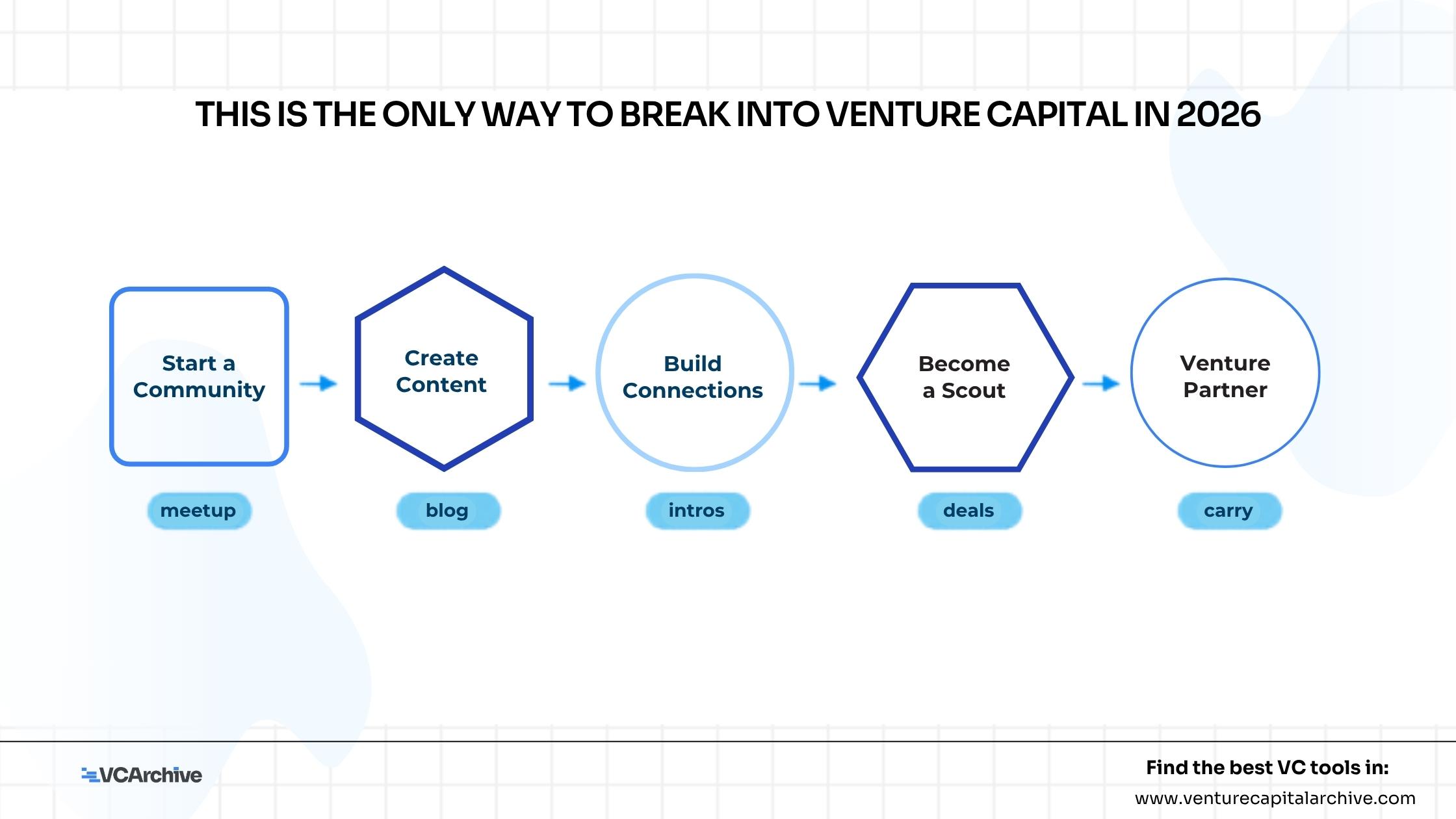
Here’s how to do it:
Start a local meetup focused on an emerging technology or industry — in your city, your district, or your university.
This gives you an excuse to reach out to impressive people: founders who could speak, VCs who might attend or sponsor.
Start writing. Blog, post, or share insights on a specific niche — startups in Central & Eastern Europe, defense tech, or even something like Next.js.
Become useful to the people building in that space.
Make introductions. Connect founders with engineers. Help things happen.
Over time, you become the most connected person in your niche.
Then you build on that.
At some point, you won’t even notice the shift — people will start coming to you.
They’ll ask for intros. For advice. For access.
That’s when you start sending highly curated intros to a small group of VCs you admire.
Learn what they like. Learn what they ignore. Get better with every introduction.
Once they start asking you for more intros, you make your move:
Ask if they’d like you to work with them more formally — as a scout.
At least one of them will say yes.
That’s exactly how we started working with Luca Stirbat at SMOK.
Once you have that scout badge on your profile, things accelerate.
More founders will reach out — now they know you can actually help them.
When one of “your” startups gets funded, ask to step up your role.
That’s how our scout Sonia Piórek became a venture partner — earning carry on deals she sourced.
Congrats. You just broke into VC.
I’m always happy to chat with ambitious people who want to get into venture.
But build something first.
Start a community. Show you can attract interesting people. Prove you can generate momentum.
That’s what gets you the meeting — and the shot.
This article was originally published on Medium by Borys Musielak and has been sourced here for educational purposes
More from Borys Musielak
No other articles from this author yet. Visit their profile.