On how to invest in venture
I’ve been a full-time venture capitalist for nearly a decade and seeded hundreds of top Y Combinator startups at Rebel Fund, now valued collectively in the tens of billions. So I’m often asked by other investors about how to get into venture investing. Since technology companies now dominate the S&P 500, there’s more interest than ever in getting into tomorrow’s trillion-dollar tech companies early, and for good reason — where else can you enjoy a 1000x+ return on a single good investment?
Many of the dozens of blog posts I’ve published over the years cover various aspects of this, but I’ve never consolidated my learnings into a single post until now. If you want to get into venture investing but aren’t sure where to start, you’re in the right place.
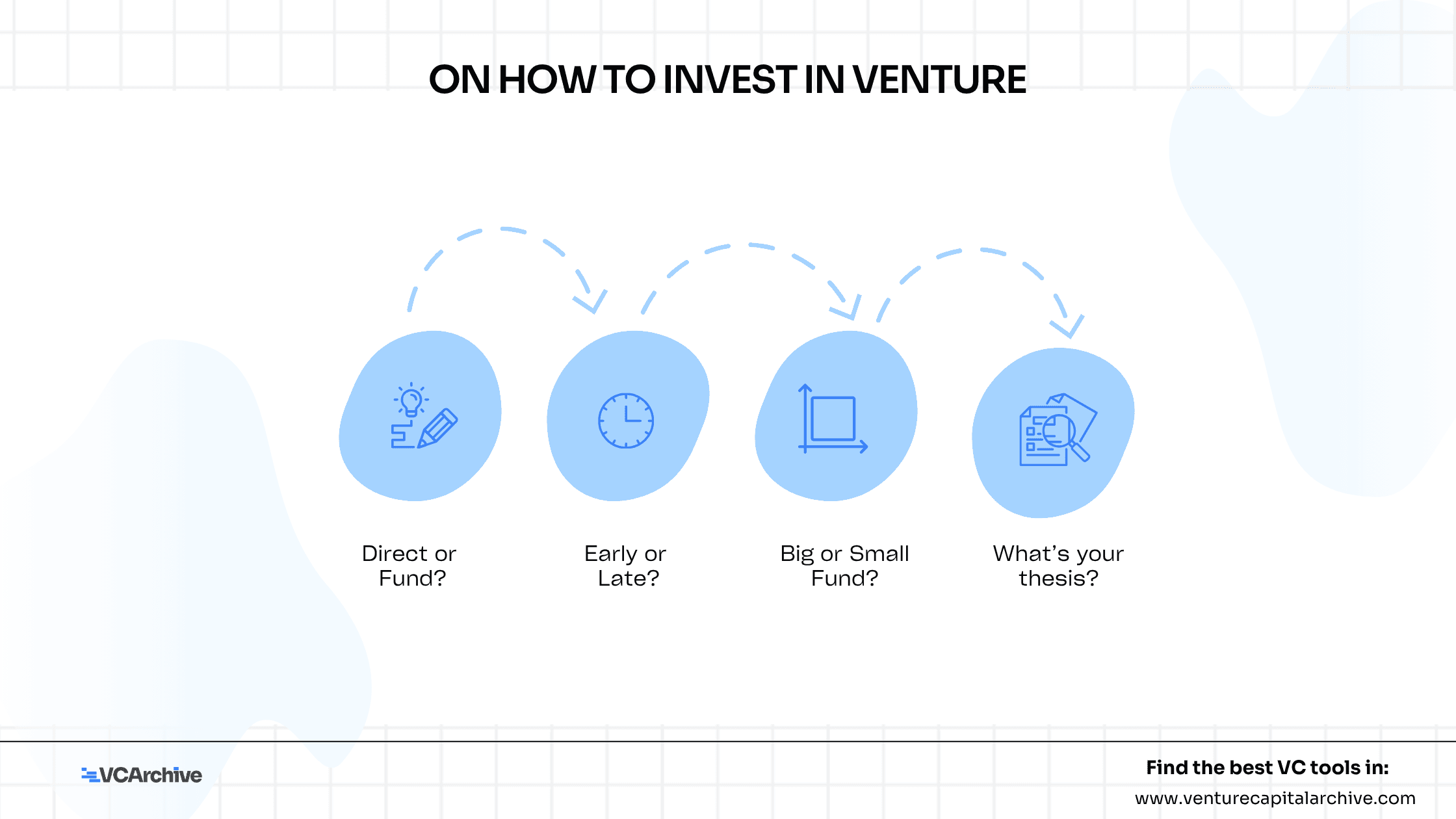
Question #1 — Should I invest in startups directly or through a fund?
The answer depends on who you are, but for the vast majority, the answer is a fund (especially for early-stage investing). Four questions decide it:
Can you build a portfolio of 50+ startups?
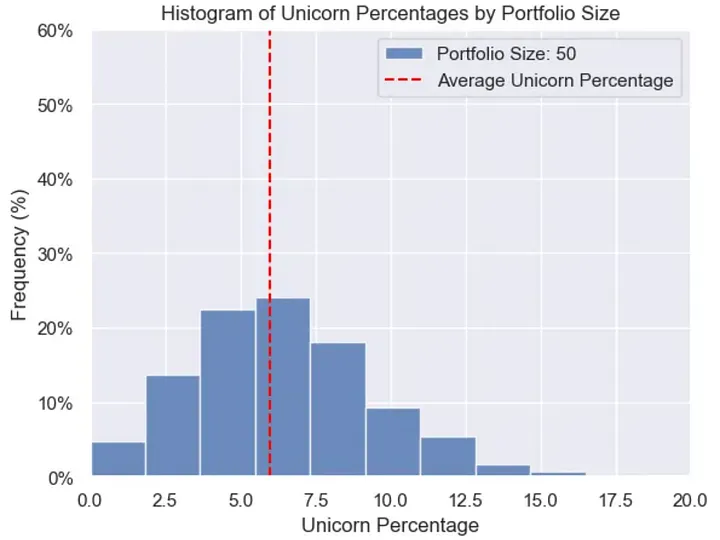
As I discussed in On the power law of Y Combinator startups, given the outcomes distribution and risk of early-stage investing, Sharpe ratios don’t start to stabilize until you have a portfolio of at least 50–75 companies and risk-adjusted returns further improve as you add shots on goal. This is more companies than most investors realize.
Are you a good picker?
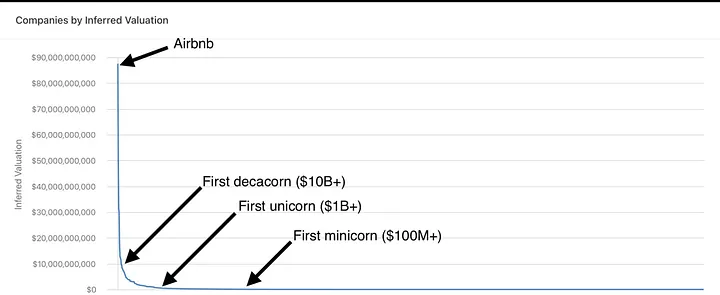
In a world where the top ~5% of investments drive ~90% of returns, picking winners is a critically important skill. To complicate matters, at the earlier stages (until around Series B) the good companies look a lot like the bad ones. Our solution at Rebel is a sophisticated ML/AI model trained on every YC company, founder and outcome in history, but if you don’t have millions of dollars to invest in data science, you at least need to have good instincts on what makes an exceptional company and founder.
Will the best founders let you in?
This is the question many newbies fail to ask themselves. Since roughly 1 out of 20 investments will drive the vast majority of your returns, even a little bit of adverse selection (i.e., not getting into that 1 deal) is fatal. Our solution at Rebel is a partnership team of famous YC unicorn founders that new YC founders can’t say no to, along with a carefully built, stellar reputation within our investment ecosystem. Regardless of your team and strategy, you need to have a very good answer to this question.
Can you help your portfolio companies grow?
This is more important in theory than practice, which makes it important in practice.
After nearly a decade of venture investing, I’ve learned that great founders don’t really need me and I can’t help the mediocre ones. The best I can do is nudge the good founders towards greatness. That said, since money is a commodity, all founders end up choosing their investors on value-add, so being able to help portfolio companies grow is the cost of admission.
If your answer to any of the questions above is “no” then you should invest in funds. In fact, even if your answer is “yes” to all of them, you should still invest in funds if their answer is a stronger yes. The only exception is if you’re investing for non-financial reasons like learning, fun, or giving back.
I’ll go further, and say that even if you ultimately want to invest directly into startups, you should still start by investing in funds. At Rebel, we have many ‘strategic’ LPs motivated beyond financial returns. For example:
Direct deal flow — Many early-stage funds can help their LPs invest directly into portfolio startups alongside them, either at the initial investment stage or growth-stage follow-ons. This is typically done via a pooled SPV (Special Purpose Vehicle) or for a large LP, a dedicated sidecar vehicle. The advantage of doing “directs via funds” is the selection and access problems have been solved for you. With the right early-stage fund partnerships, you can build an institutional-grade directs portfolio at a fraction of the risk of going in alone, and a fraction of the cost of investing in a growth fund.
Education — Watching fund managers do their thing is a great way of learning, and LPs get a front row seat. You can learn how professional managers think about the macro environment, technology trends, portfolio construction, deal selection, access, reporting, etc.
Community — At Rebel, we have hundreds of LPs and bring them together for various events where they can learn directly from our leadership, portfolio founders, guest speakers, and each other (and have fun!)
Question #2 — Should I invest in early or late-stage startups?
Since we invest exclusively in seed-stage YC startups, my perspective is admittedly biased, but I’m a big fan of the early stage. The obvious reason is the closer you get to company formation, the bigger the financial upside, but there are other reasons as well:
Diversification — Minimum check sizes are much lower for early-stage startups than late-stage, which allows more diversification for a given investment budget.
Cost — While more expensive YC startups typically do better at the seed stage, the valuation premium grows exponentially as companies mature.
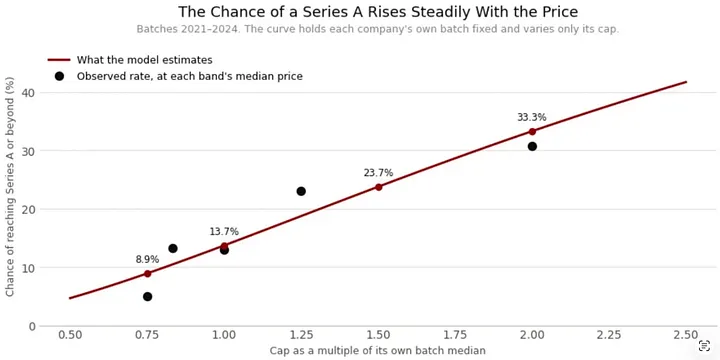
Access — The access issue also gets harder as companies grow. By the time companies reach the Series B stage, it’s fairly obvious who the winners are, so unless you supported them early or are well-known in the industry, you probably won’t get into the best rounds.
Fun — I think this one is often under-appreciated. Supporting founders at the earliest stages when they actually need your money is a lot more fun than fighting for scraps in some hot late-stage round. You get to work directly with incredibly smart people at the height of their optimism.
Many investors view late-stage startups as less risky since they’ve already achieved product-market fit (PMF), but I think they’re just trading company risk for macro risk. When you invest at the early-stage, you don’t need to worry about the macro environment because their valuation will almost certainly grow in the years ahead if they do well, regardless of whether current valuations are high or low. When you invest at the late-stage, you’re heavily exposed to a near-term crash in valuations or a cold IPO market.
Question #3 — Should I invest in big or small funds?
The first thing to understand is how fund size dictates what needs to happen for you to make money.
A $100M fund needs $300M of attributable exit proceeds to return 3x gross, but a $1B fund needs $3B. Even if we generously assume the $1B fund manager is just as skilled, motivated, and selective, the mathematics are unavoidable, as is the rarity of multi-billion dollar paydays.
The case for big funds is they can keep funding their winners round after round instead of getting diluted, which matters when the power law is this steep. Also, their outcomes are less volatile, albeit at the cost of mediocrity, which some LPs oddly prefer.
The downside of big funds is the managers must demand ownership that the best founders won’t give them and feel pressure to write far more checks than their team can support. Big fund managers are also more motivated by management fees than carry, which creates an obvious misalignment with LPs.
While dispersion among smaller funds is greater, the data shows they outperform the big funds both at the high-end and on average, which says everything you need to know.
At Rebel, we built a strategy and our fund size was a natural consequence, as opposed to picking a fund size and then building a strategy around it. While they won’t readily admit it, most big fund managers did the latter.
Question #4 — What is my investing thesis?
There are several thousand new venture-backed startups launching each year in the US alone and you can’t invest in them all. Nor would you want to, since the median startup outcome is terrible. Startup investing is about hitting the bullseye, and you need a specific investing thesis to hit it reliably. And no, an investing thesis isn’t “AI” or “robotics”.
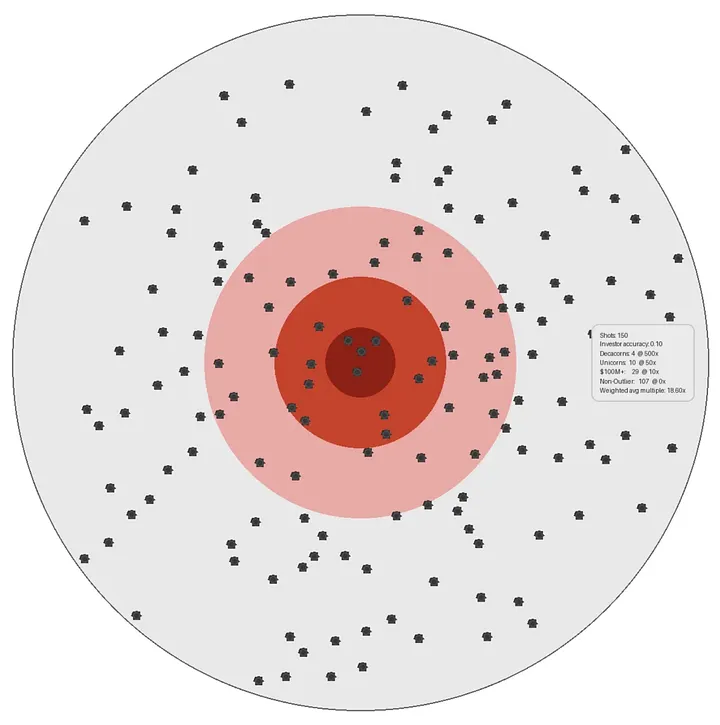
At Rebel, we target the top 10% of new YC startups, which we’re uniquely positioned to do with our partnership team, history, reputation, algorithm, etc. Just as great startups have founder-product fit, great investors have manager-thesis fit. I’ve seen many theses work, but only when there’s alignment between the managers and the fund’s unique investing strategy.
Even if you’re investing exclusively into funds, you still need a thesis. For example, one of our LPs only invests in funds that have unique access to a vetted ecosystem, like Y Combinator or the PayPal mafia. Another LP only invests in funds that can provide high-quality deal flow for their direct investments, and another only in data-driven funds. It’s not that other types of funds can’t achieve strong financial performance for these LPs, it’s that they aren’t in a good position to select and access them.
This article was originally published on Medium by Jared Heyman and has been sourced here for educational purposes
More from Jared Heyman
No other articles from this author yet. Visit their profile.