Impact Investing Through the Family Office Lens — Why Values and Returns Are Finally Speaking the Same Language
For most of my career, impact investing was treated as a category that required an apology. You could do well or you could do good ‚Äî the implicit assumption was that you couldn’t do both with full conviction on either side. Impact was philanthropy with ambition, or it was returns with a conscience clause. The family offices and private wealth structures I worked with either avoided it entirely, dabbled in it as a small allocation to satisfy a family member’s values, or made genuine commitments to it while quietly accepting that they were leaving returns on the table.
That has changed. Not uniformly, and not without complexity ‚Äî but the change is real, and the families and advisors who haven’t updated their thinking are operating on assumptions that no longer hold.
What’s Actually Different
The shift isn’t primarily ideological. It’s structural. The data on performance has matured enough that the prior assumptions about a mandatory trade-off have been substantially complicated. There are now sufficient years of returns data across impact-focused strategies in private credit, infrastructure, climate technology, and sustainable agriculture that comparing risk-adjusted performance against conventional alternatives is possible in a way it simply wasn’t a decade ago.
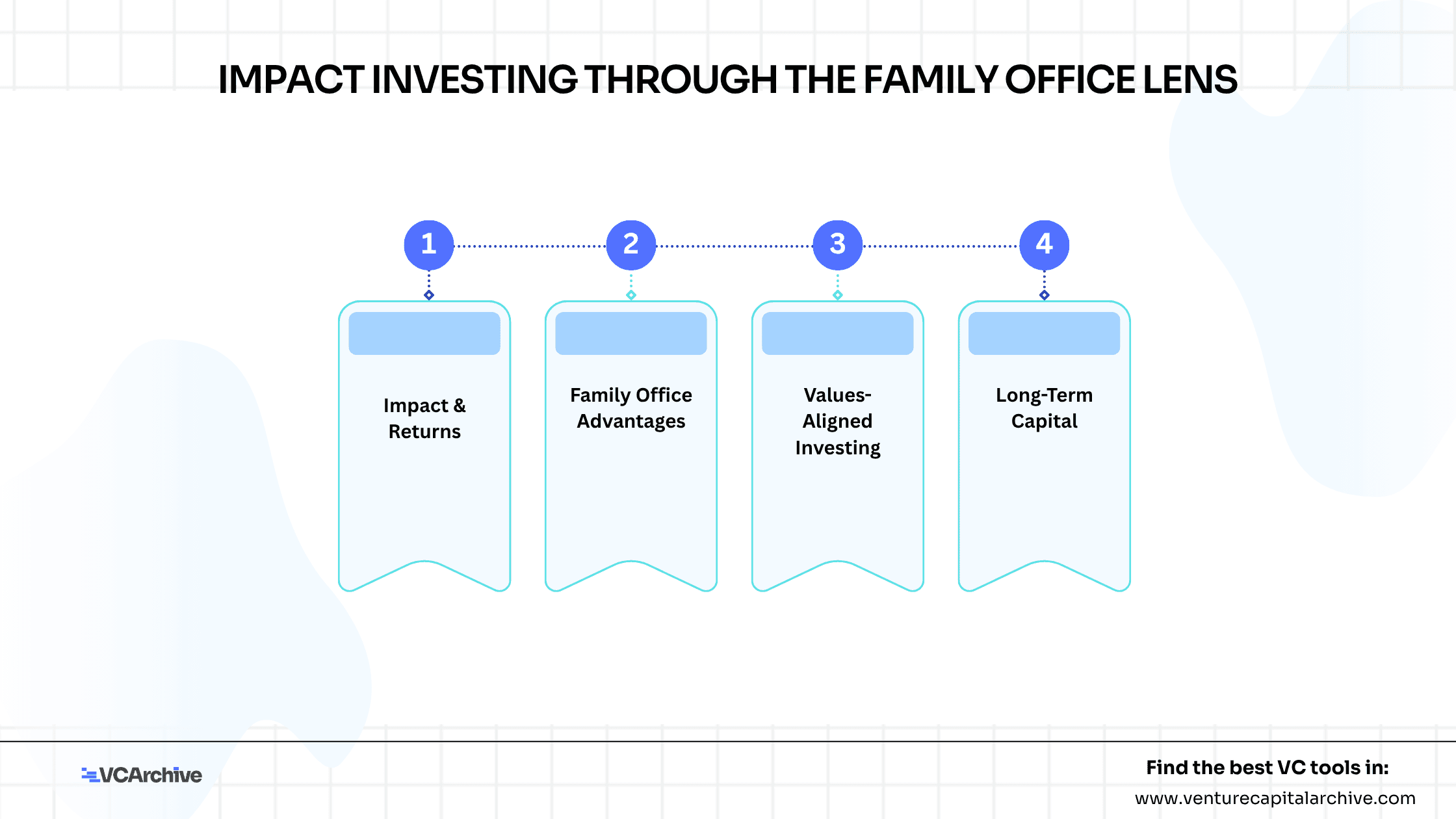
The conclusion isn’t that impact investing universally outperforms. It’s more nuanced than that ‚Äî and more useful. In certain sectors and structures, the alignment between impact thesis and investment thesis creates genuine competitive advantage: earlier access, better management quality, stronger stakeholder relationships, and more durable moats. In others, the impact premium is real and the return compression is real too. The honest conversation is now about which categories, structures, and time horizons generate what outcomes ‚Äî not about whether impact and returns are fundamentally incompatible.
This is the conversation that sophisticated family offices are having, and it’s a far more productive one than where we were five years ago.
Why the Family Office Structure Is Particularly Well-Suited
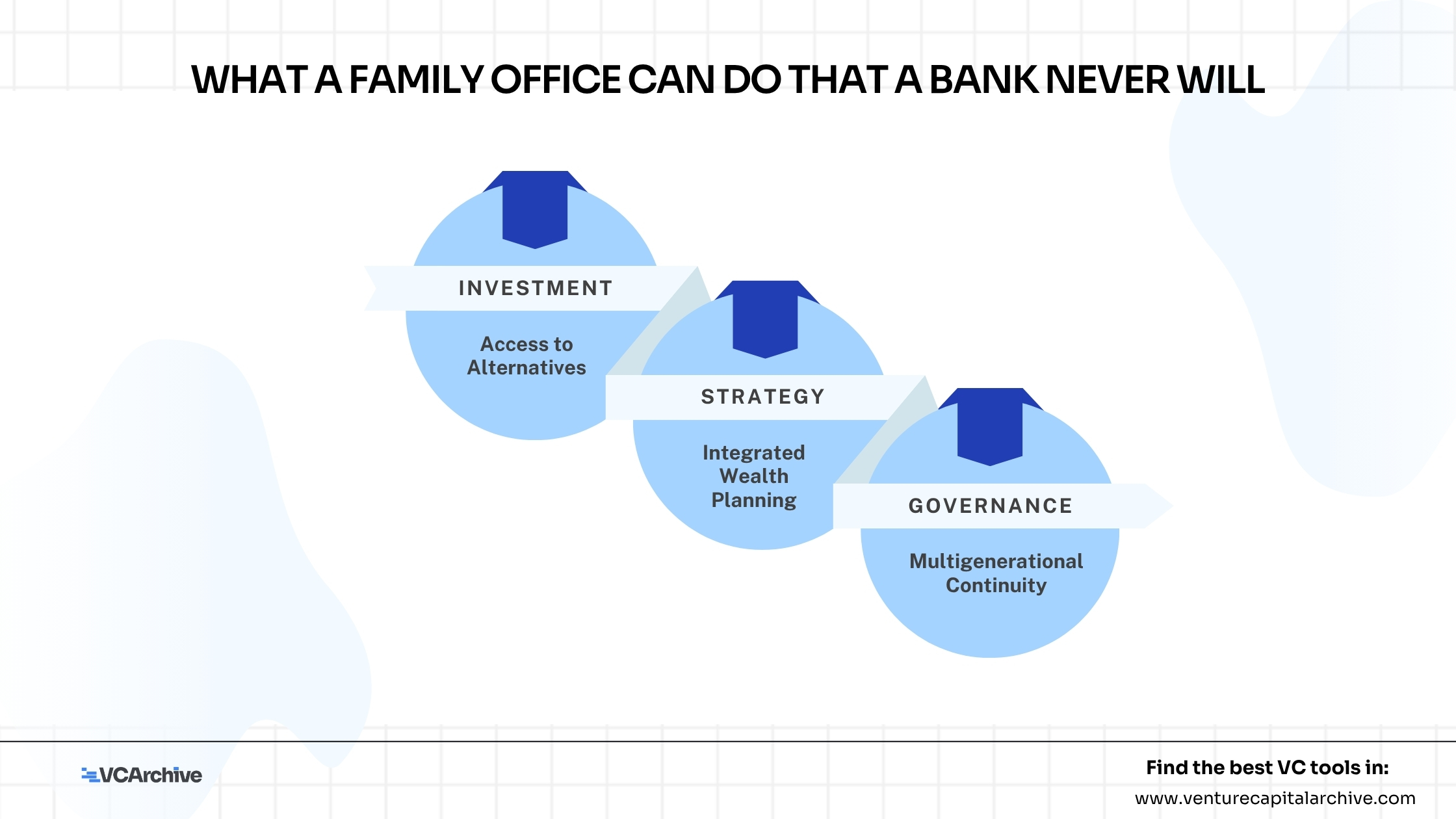
Family offices have structural advantages in impact investing that institutional allocators simply don’t have. The first is time horizon. Most institutional funds are constrained by fund lifecycles, LP return expectations, and redemption dynamics that create pressure to optimize over periods that are genuinely too short for many impact investments to demonstrate full value. Family capital ‚Äî particularly multigenerational family capital ‚Äî can operate on a ten, twenty, or thirty-year view. That’s not just a preference. It’s a structural edge.
The second is patient capital compounding with values alignment. In my experience, the most productive family office impact programs aren’t built around a financial thesis with a values filter applied on top. They’re built around a values framework with a rigorous investment discipline built from within it. When a family’s philanthropic mission, its operating business interests, and its investment portfolio are pulling in the same direction, the result is a coherence that creates both better investment decisions and stronger family engagement across generations.
The third is the ability to deploy in structures that are inaccessible to many institutional allocators. Direct investments, co-investments, blended finance structures, and program-related investments all require a level of flexibility and due diligence capacity that family offices can provide in ways that conventional fund structures cannot.
The Questions I Ask Families Now
When I’m working with a family on the impact component of their overall strategy, I’ve shifted the questions I start with. A few years ago, the conversation began with: “What percentage of your portfolio do you want to allocate to impact, and what return expectations will you accept?” That framing treats impact as a carve-out ‚Äî a designated lane with different rules.
Now I start differently. I ask what the family is trying to build over the next twenty-five years ‚Äî as a financial enterprise, as a family unit, and as a presence in the world. I ask what sectors and geographies align with both their expertise and their values. I ask what the rising generation cares about deeply, because in my experience, multigenerational wealth strategy that ignores the rising generation’s engagement is a succession plan waiting to fail.
From those answers, a much more coherent investment thesis usually emerges ‚Äî one that isn’t about impact as a separate allocation, but about a portfolio architecture where values and returns are genuinely integrated rather than awkwardly co-existing.
The Honest Limitations
I’m not arguing that impact investing is without trade-offs or complexity. Measurement remains inconsistent across the sector ‚Äî the vocabulary of impact metrics is still being standardized, and greenwashing is real enough to require serious due diligence vigilance. Liquidity profiles for many impact-oriented private investments are long, and that needs to match actual capital requirements. And the sector still produces enough mediocre managers that manager selection is as important here as anywhere else, arguably more so.
But the families that will be best positioned in ten years will be those that treated the current period — when impact strategies are maturing, track records are being built, and serious practitioners are separating from the opportunists — as the right time to develop real competency and conviction. Not as a trend to wait out.
Values and returns were never as incompatible as the conventional wisdom suggested. The evidence is increasingly clear on that point. The question now is whether family offices are building the analytical rigor and governance structures to act on it intelligently.
The ones that are will have a significant advantage. The ones waiting for more certainty may find they’ve let the best entry point pass.
This article was originally published on Medium by Scott Gelbard and has been sourced here for educational purposes