Fundraising in an Era of Change
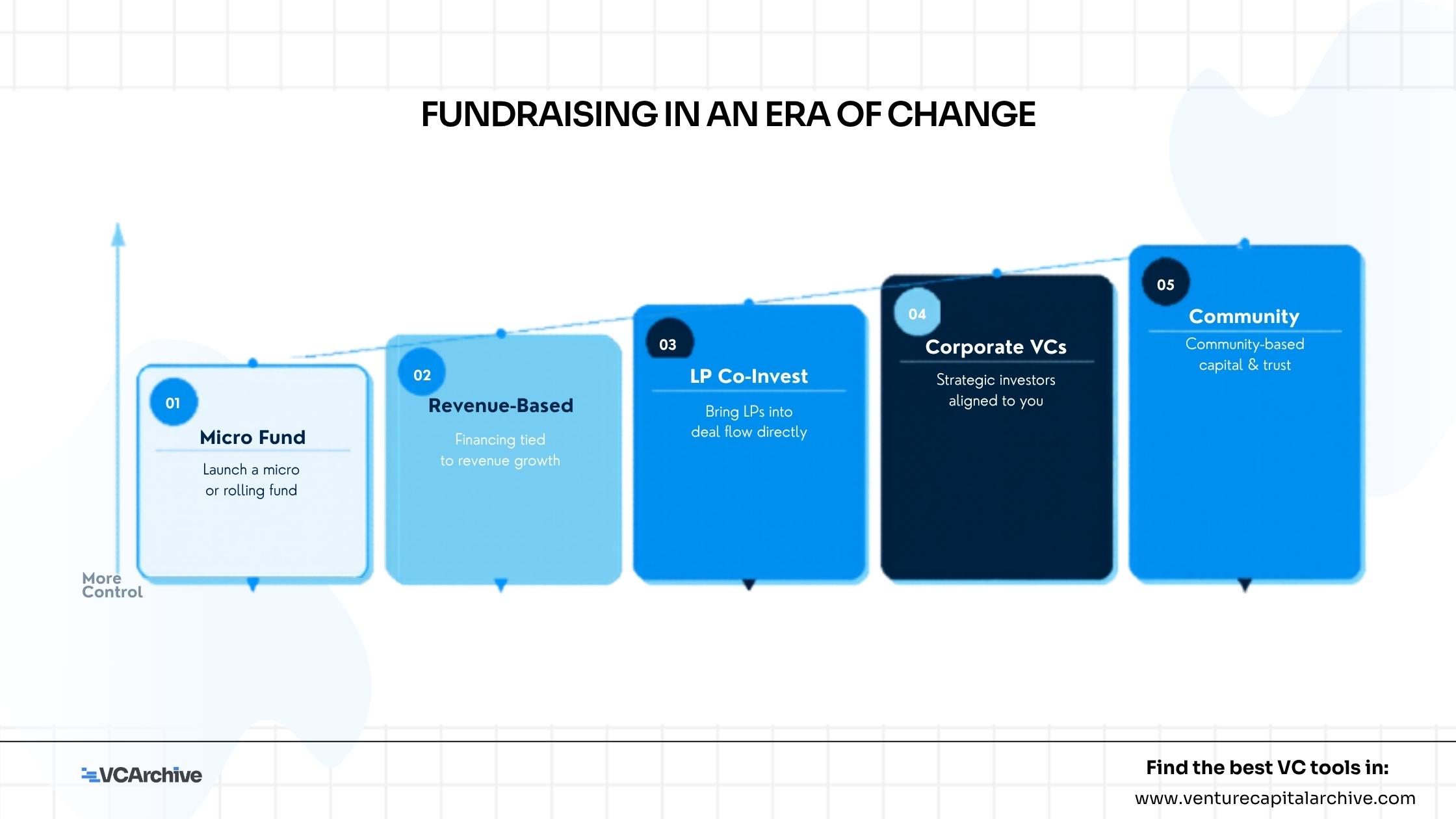
To note that today’s fundraising climate is changing is a vast understatement. Among the top challenges, traditional venture capital is increasingly concentrated. Mega-funds are snapping up the lead positions on the hottest new offerings, while pushing smaller investors aside. For founders and funders alike, the traditional playbook is an increasingly high barrier for rising innovators to reach, resulting in fewer deals and fewer opportunities to scale.
For those being funded by VCs and traditional PE funds, the model often leads to lower control, diluted ownership, and misaligned priorities.
But in this new era of change, smarter, more agile approaches are emerging. Here’s how today’s most strategic players are flipping the script, not only to raise capital, but also to advance and scale effective models for growth and ecosystems that are ready to thrive.
1. Launch a micro-fund or rolling fund to back an aligned portfolio
Rather than fight for allocations in deals led by institutional giants, forward-looking investors are increasingly building their own vehicles—small funds, rolling funds, or micro-VC platforms—to back an aligned group of portfolio companies. This strategy has multiple advantages:
- It provides built-in diversification and upside across multiple bets
- It allows investors to set their own terms and lead rounds
- It creates strategic alignment between founder and funder visions
- It enables cross-company collaboration and shared infrastructure
When it’s done well, this strategy turns investors into ecosystem builders and strategic partners as opposed to simply writing the checks.
2. Leverage strategic partnerships and channel investors
Strategic partnerships that can includehigh-value customers, suppliers, and distribution partnersare increasingly willing to write investment checks in exchange for future value or exclusivity.
These “channel investors” may bring some unique advantages such as:
- Go-to-market acceleration
- Product validation
- Built-in customer bases
They invest because it improves their bottom line along with your own.
3. Build investor demand before you open the round
Top fundraisers today treat capital raises like product launches. This can include:
- Pre-marketing your vision with curated updates and investor content
- Creating waitlists of interested backers before the round opens
- Using rolling closes to reward early believers and build momentum
This is another approach that flips the dynamic because you’re not merely chasing capital, you’re choosing the right partners as well.
4. Use equity crowdfunding to validate and amplify
While this is not ideal for every startup, equity crowdfunding platforms (like Wefunder, StartEngine, or Republic) can be powerful for:
- Consumer-facing brands
- Companies with passionate communities
- Founders looking to generate press and traction while still raising funds
These platforms can also unlock capital from nontraditional investors, many of whom become loyal customers and evangelists.
5. Prioritize values-aligned capital over highest bidder
In this era of values-based business, the right capital often matters more than the biggest check. Founders increasingly look for:
- Aligned interests in core principles such as mentorship, integrity, and allegiance to a higher purpose
- Shared long-term vision
- Operating experience, not just capital
- Respect for sustainable, inclusive growth
Saying “no” to the wrong money preserves your mission and can drive better long-term returns.
As those who follow my columns may know, many of these principles have served as the impetus for my own decision to launch the Chang Robotics Fund—a $50 million fund that has placed investment into eight portfolio companies so far. While we (or our portfolio companies) may also take in traditional funding at later points, we’ve taken this move first for all the reasons I’ve stated.
In all, today’s fundraising process isn’t just about surviving a tighter market—it’s just as much about using new tools to stay in control, to build aligned ecosystems, and to create more ideal conditions for long-term success. I look forward to hearing from others who are doing the same.
This article was originally published on Inc Magazine by Matthew Chang and has been sourced here for educational purposes
More from Matthew Chang
No other articles from this author yet. Visit their profile.