What to Expect for Venture Capital in 2024: Looking Backward at 2023 to Inform How to Look Forward to 2024
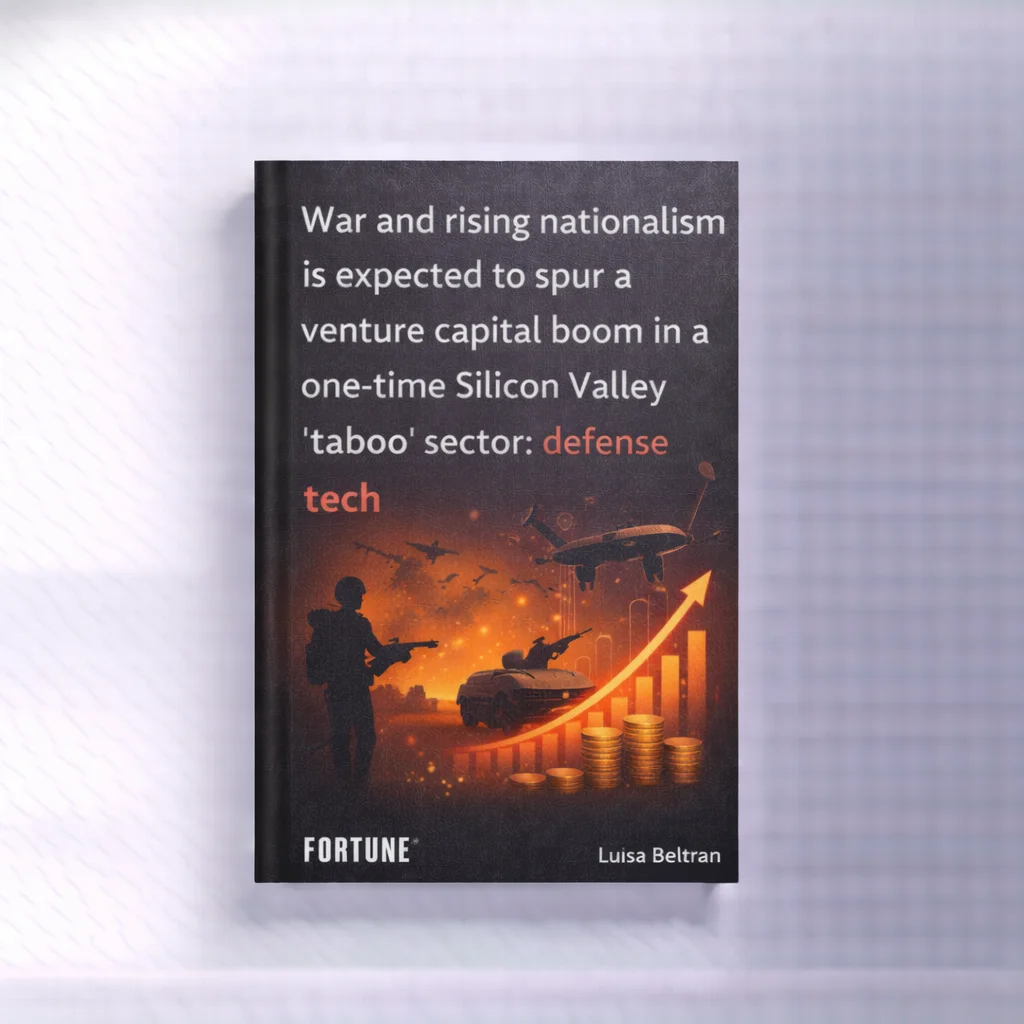
Geopolitics has shattered the Silicon Valley taboo on military tech, accelerating a structural shift to 'Dual-Use' technologies tested in kinetic conflicts like Ukraine and Israel. The report highlights how agile players like Palantir, Anduril, and SpaceX are outperforming legacy contractors by deploying AI-driven intelligence and autonomous systems in real-time. VCs are aggressively rotating capital into deep-tech defense, betting on long-term government contracts over consumer apps. This marks the end of the 'software eats the world' era and the beginning of the 'hardware saves the world' thesis, where innovation cycles are driven by the urgency of active conflicts rather than just market speculation.
Why is relevant?
We are witnessing a structural pivot in the VC asset class where 'Defense Tech' offers a hedge against recession due to sticky government spending. For investors and founders, it signals that the next unicorns won't be social networks, but companies that secure national interests and redefine military readiness. It forces a re-evaluation of ESG criteria and opens massive opportunities for startups building cybersecurity, surveillance, and autonomous logistics.
Author
Luisa Beltran
Publication date
July 23rd, 2024
Difficulty
Intermediate
Keywords
- Defense Tech Investment
- VC Strategies
- Geopolitical Impact
- High-Tech Innovation
- Military Technology
Last update