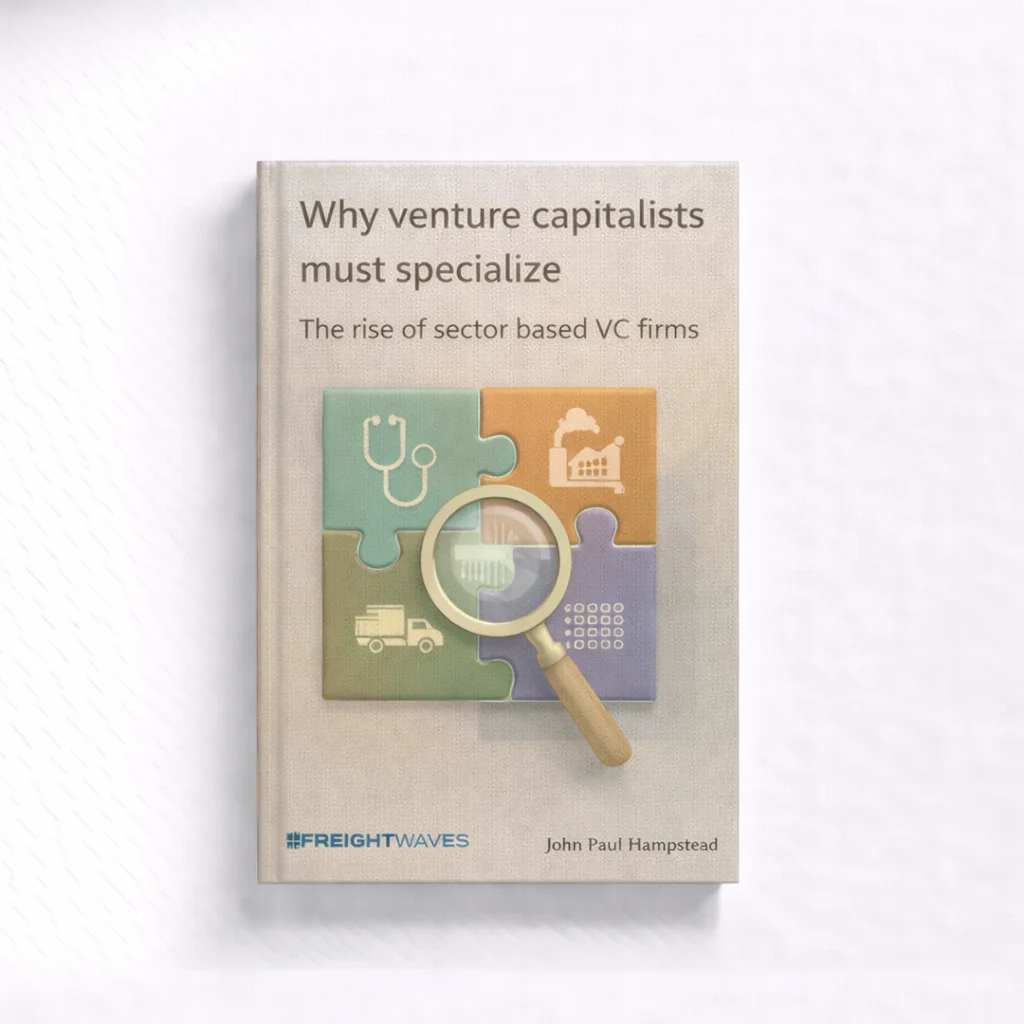
Why venture capitalists must specialize
Hampstead interviews sector-focused supply chain and mobility investors, including Ty Findley of Ironspring Ventures, Julian Counihan of Schematic Ventures, Santosh Sankar of Dynamo Ventures, and Chris Stallman of Fontinalis Partners, to argue VC specialization is accelerating as competition intensifies, citing Morgan Stanley research showing VC returns have compressed toward roughly S&P 500 levels over 20 years despite illiquidity, while US VC fundraising topped $50 billion in both 2018 and 2019. Interviewees describe specialization as a barbell concentrated at early and pre-IPO stages, since deploying large check sizes within one narrow sector is difficult for billion-dollar funds, and stress that a durable sector thesis, framed broadly enough to span decades of shifting sub-themes, matters more than initial specificity for keeping a fund relevant as technology evolves. Sector-focused VCs describe adding value beyond capital through faster diligence via existing industry relationships, better evaluation of leading indicators like data access agreements rather than misleading revenue ramps common in industrial verticals, customer and talent introductions, and exit guidance, since sector expertise lets investors identify strategic buyers and steer founders away from deal terms that would quietly close off an acquisition path.
Why is relevant?
Founders in traditionally overlooked industrial and supply chain verticals get a concrete argument for why a sector-focused, sometimes newer or smaller fund may add more value than a well known generalist, since sector VCs describe evaluating early traction through industry-specific leading indicators rather than a generic revenue growth lens that can mislead in complex verticals. Emerging fund managers deciding whether to specialize get direct, practical guidance from several sector-focused GPs on defining a thesis broadly enough to remain relevant across decades of shifting sub-themes, plus a concrete warning that assets under management itself dictates how disciplined a specialist fund can stay over time. Founders weighing a strategic exit get useful, specific advice on how sector expertise translates into exit strategy, since these investors describe recognizing which deal terms, like customer exclusivity clauses, can quietly close off acquisition paths years in advance, a level of foresight a generalist investor without deep industry relationships may not catch.
Author
John Paul Hampstead
Publication date
August 17th, 2020
Difficulty
Intermediate
Keywords
- sector-based VC
- VC specialization
- supply chain investing
- mobility VC
- industrial leading indicators
- exit strategy guidance
- dry powder
- corporate venture capital distinction
Last update